This post was originally published on this site
PRESTON MONONGYE
+
JESSE MONONGYA
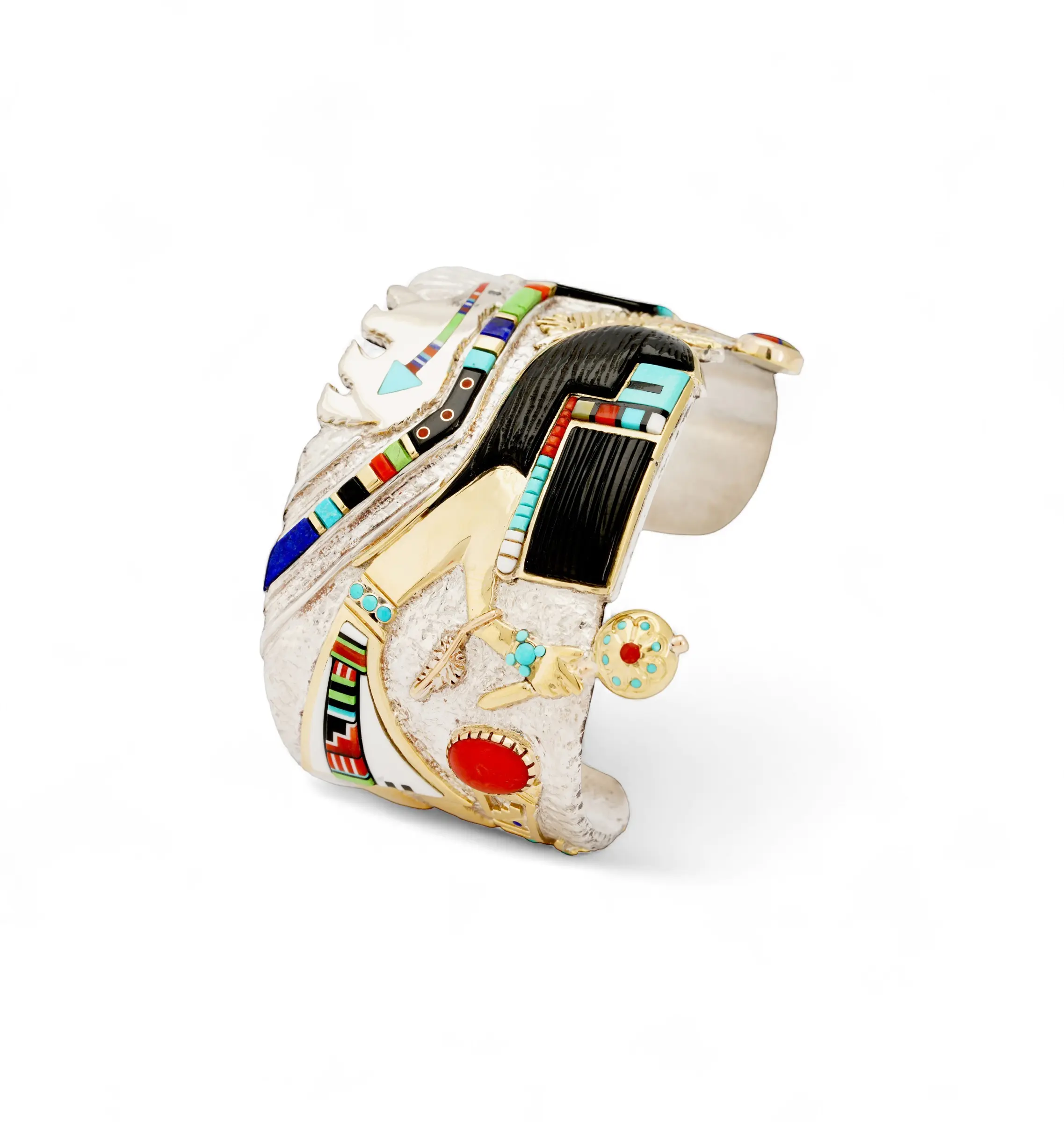
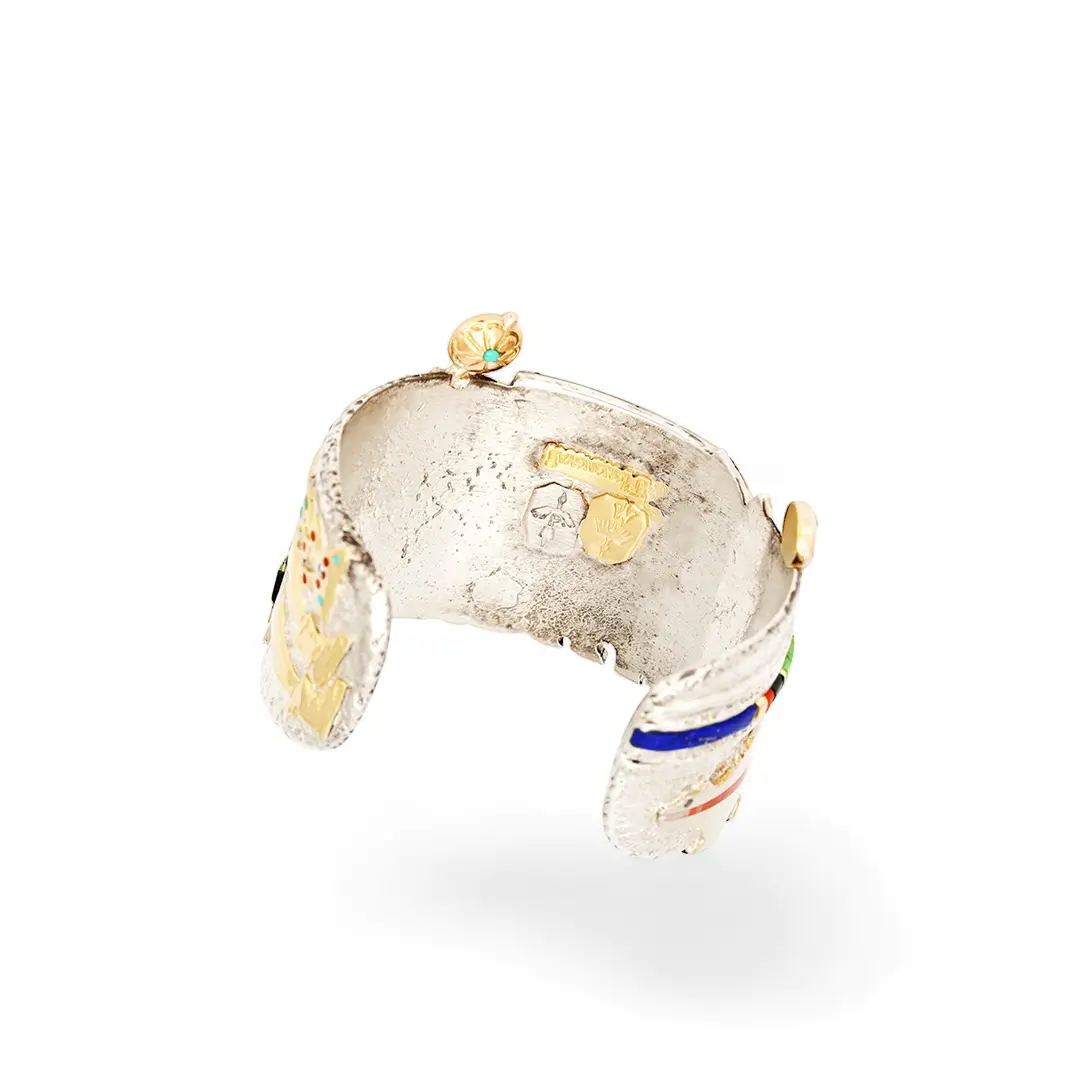
This sterling silver and 14k gold bracelet is a rare collaboration between Preston Monongye and his son Jesse Monongya, featuring a beautifully detailed depiction of the Long Hair Kachina Dancer. At the heart of this piece is the Long Hair Kachina (Angak’china), a figure in Hopi ceremonial tradition known for bringing rain and promoting balance with the natural world.
Texture
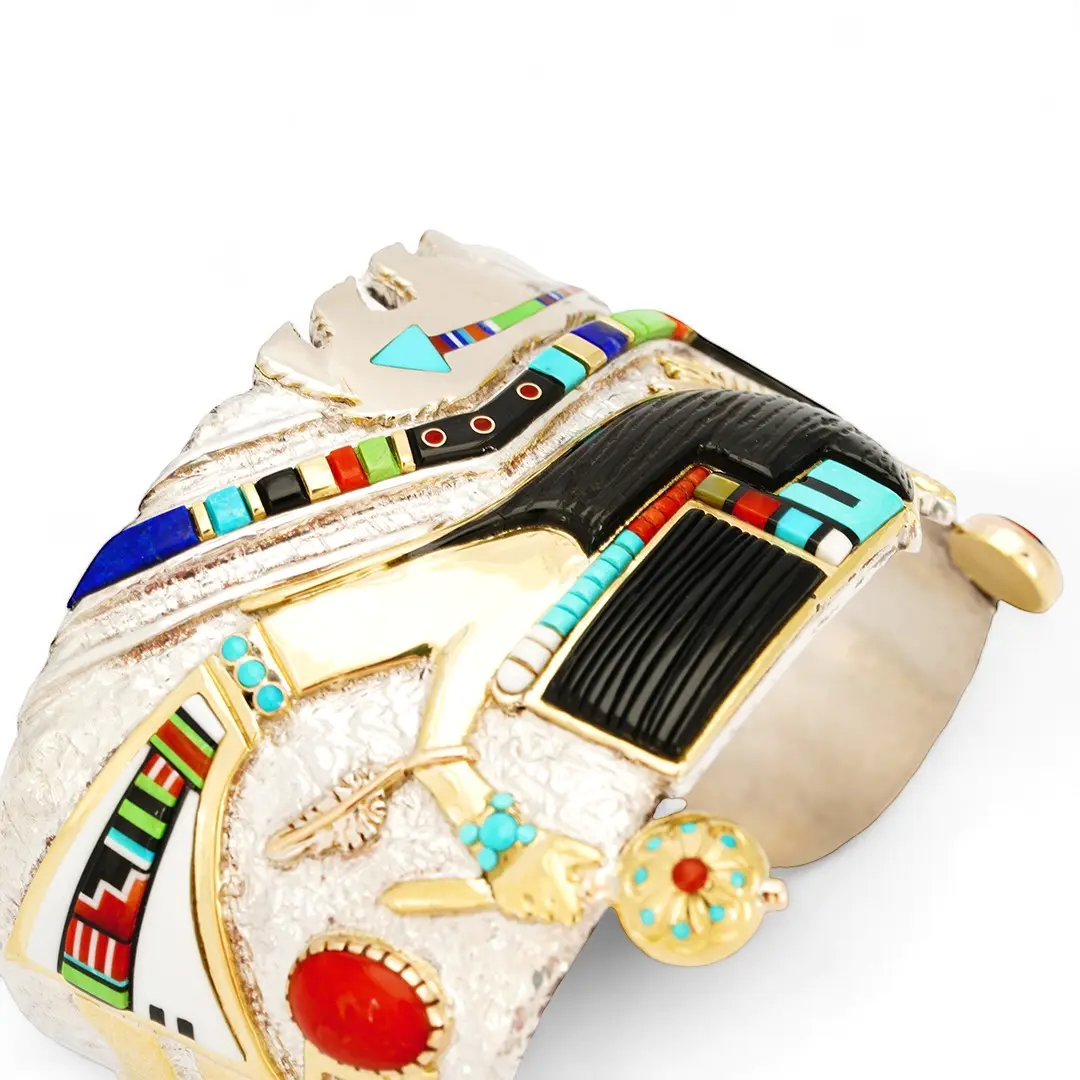
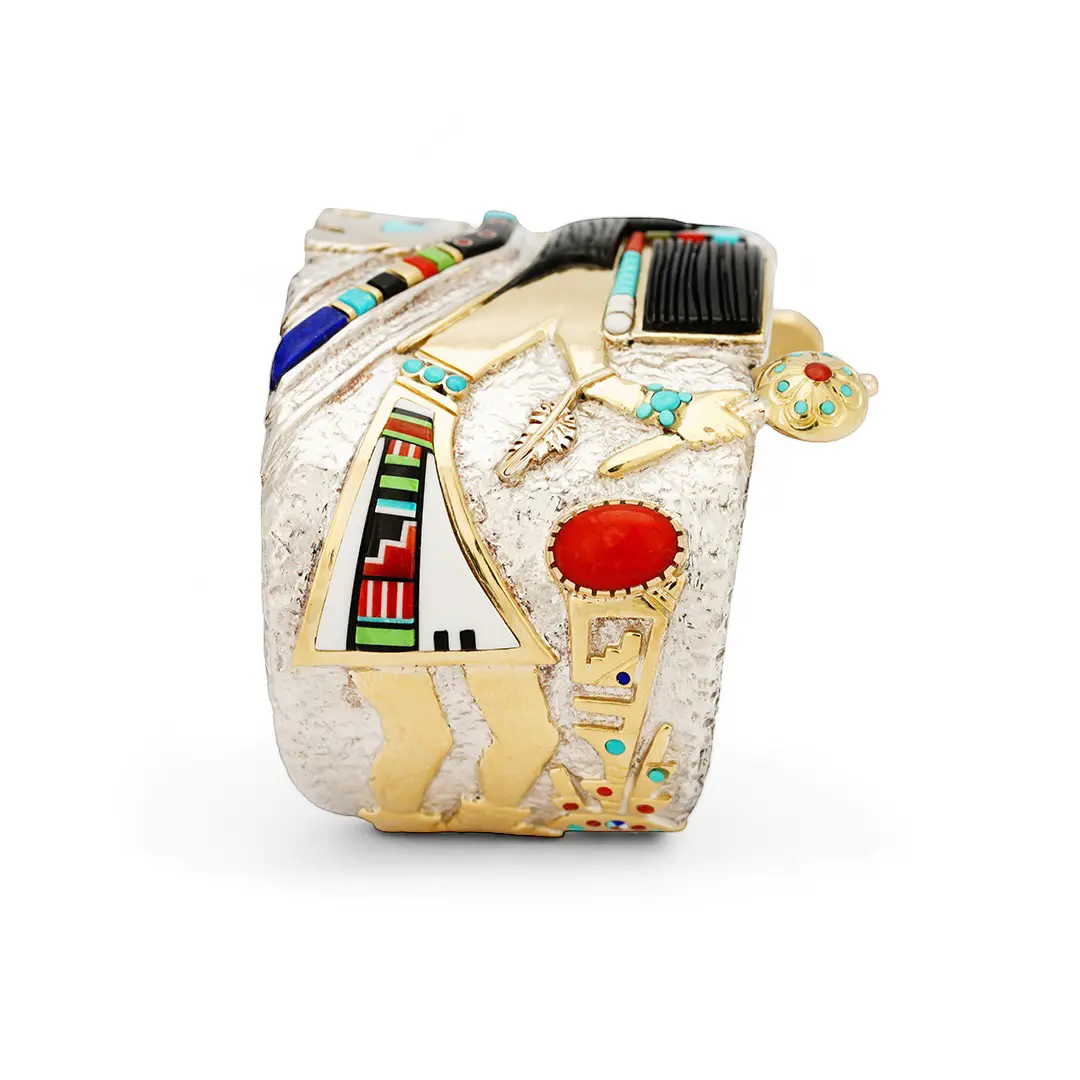
From the hand-carved flowing black jade hair to the intricate micro inlay, every element captures the motion and spirit of the dance. A standout feature is the gold rattle, which extends beyond the edge of the textured sterling silver lost wax casting, inlaid on both sides with natural coral and turquoise stones.
Kachina Hand- Fabricated in 14k Gold
Shown on this bracelet, an inlaid set in 14k gold, the dancer wears a traditional-style kilt inlaid with turquoise, coral, shell, and black jade, symbolizing the spiritual traditions of American Indians. His outstretched arms and detailed regalia, formed in gold and inlay, evoke both motion and reverence.
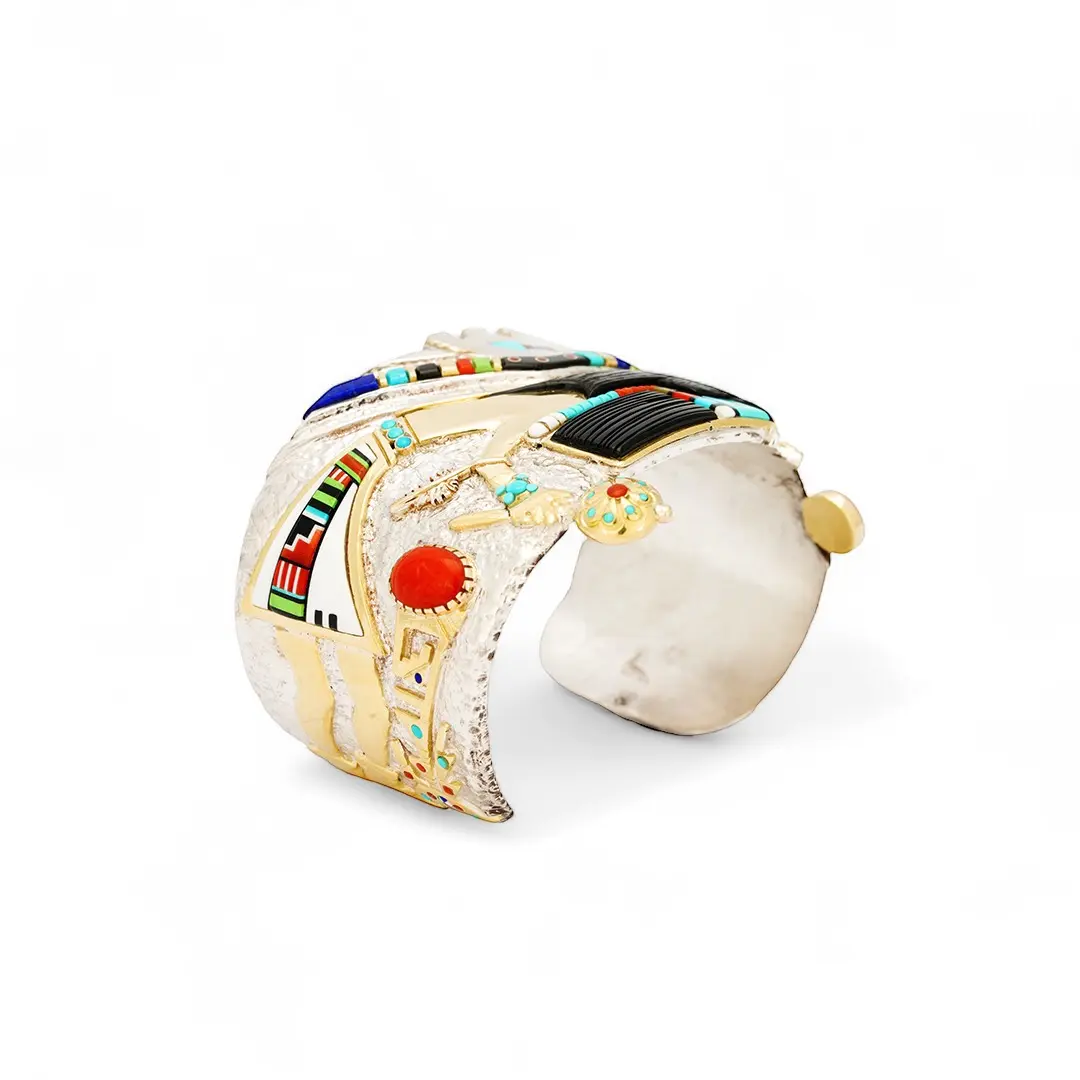
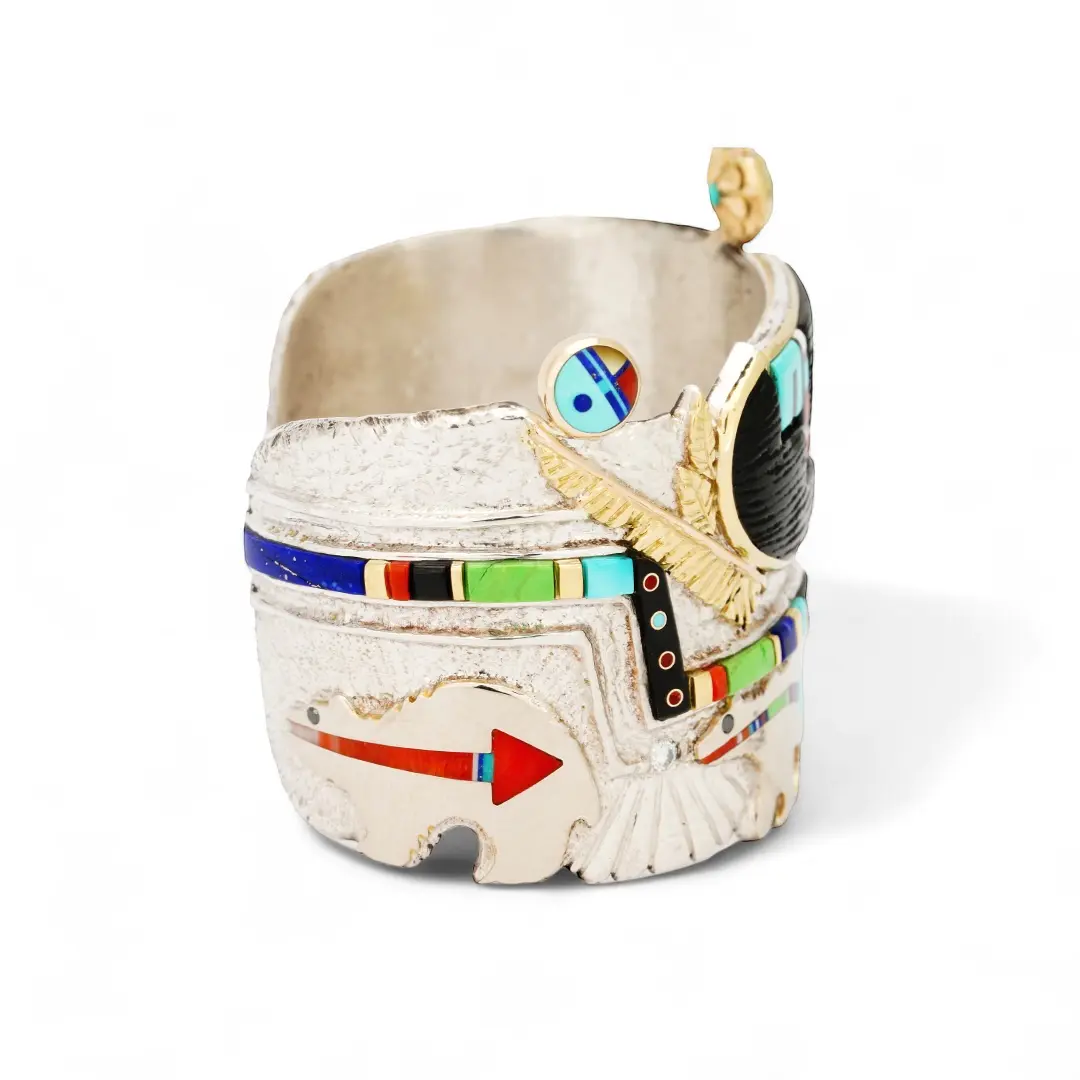
Detail Inlaid
Framing the dancer is a row of inlay set with lapis, turquoise, coral, black jade, and fine gold accents, along with two inlaid heart-line bears — powerful symbols of life force and strength in Native tradition.
PRESTON MONONGYE
Preston Monongye (1927–1987) was a pioneering force in the “New Indian Jewelry” movement of the 1960s and 70s. Born in Los Angeles and abandoned at Hopi at the age of seven, he was adopted by a prominent Hopi family and fully immersed in Hopi religious and cultural life. At nine years old, he began apprenticing with his uncle, the renowned silversmith and painter Gene Pooyama. After serving as a paratrooper in World War II, Monongye worked as a Kachina painter and took occasional jobs with Roman Hubbell and the Fred Harvey Company. He later re-enlisted for the Korean War and worked in law enforcement for the Bureau of Indian Affairs, continuing to paint and make jewelry during that time.
In the early 1960s, he left government work to pursue jewelry full-time and quickly gained recognition for his innovative approach, merging traditional Hopi techniques with a bold, contemporary vision. He became especially known for his tufa cast silver set with stones cut by Lee Yazzie and later by his son, Jesse Monongya. A dedicated teacher and respected voice in Native design, Monongye taught at workshops and lectured across the country.
JESSE MONONGYA
Jesse Monongya (1952–2024), the son of renowned Hopi jeweler Preston Monongye, was a master of contemporary Native American jewelry, known for his intricate micro-inlay work and cosmic-inspired designs. Of both Navajo and Hopi heritage, Jesse grew up learning from his father but quickly developed his voice, blending traditional influences with a bold, visionary style. While Preston was celebrated for his tufa cast silver work, Jesse took art in a new direction—his jewelry often features meticulously inlaid turquoise, lapis, coral, fossilized ivory, and fine gold accents, forming complex, symbolic compositions that reflect the universe, the earth, and Native philosophy.
His bracelets and necklaces are among the most technically advanced pieces he made, with a level of detail and craftsmanship that few can match. Jesse’s work not only honors the legacy of his father but also pushes the boundaries of what Native jewelry can be, earning him a place in major museum collections and recognition as one of the leading jewelers of his generation.
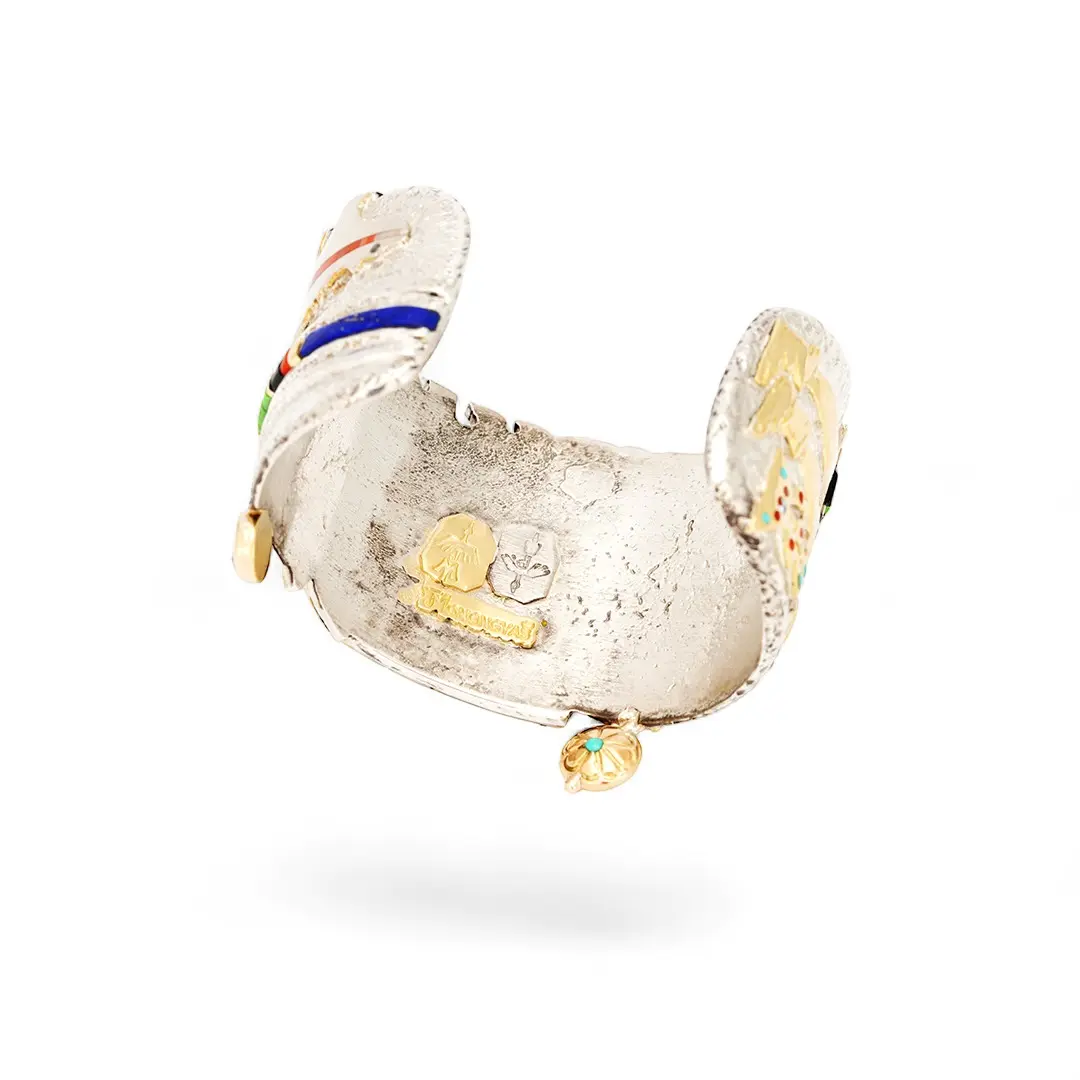
“More than just a piece of jewelry, this bracelet tells a story — one of memory, ceremonial tradition, and the legacy of innovation in Native American art. Signed by both artists, it stands as a museum-quality tribute to a collaboration not often seen, but meaningful when it occurs.”
– Michael Faust
Santa Fe Gallery Next Event
480-200-4290 | 480-745-5928 | bill@faustgallery.com | sales@faustgallery.com


