Faust Gallery
About the Gallery
American Indian Art & Jewelry

Scottsdale, 1987 — moving into the Marshall Way space. From left: painter David Johns, jeweler James Little, jeweler Harvey Begay, sandpainter Joe Ben Jr., jeweler Larry Golsh, master jeweler, painter and potter Charles Loloma, Lovena Ohl, Bill Faust, Shaliyah Ben (Joe’s daughter), and jeweler Charles Supplee.
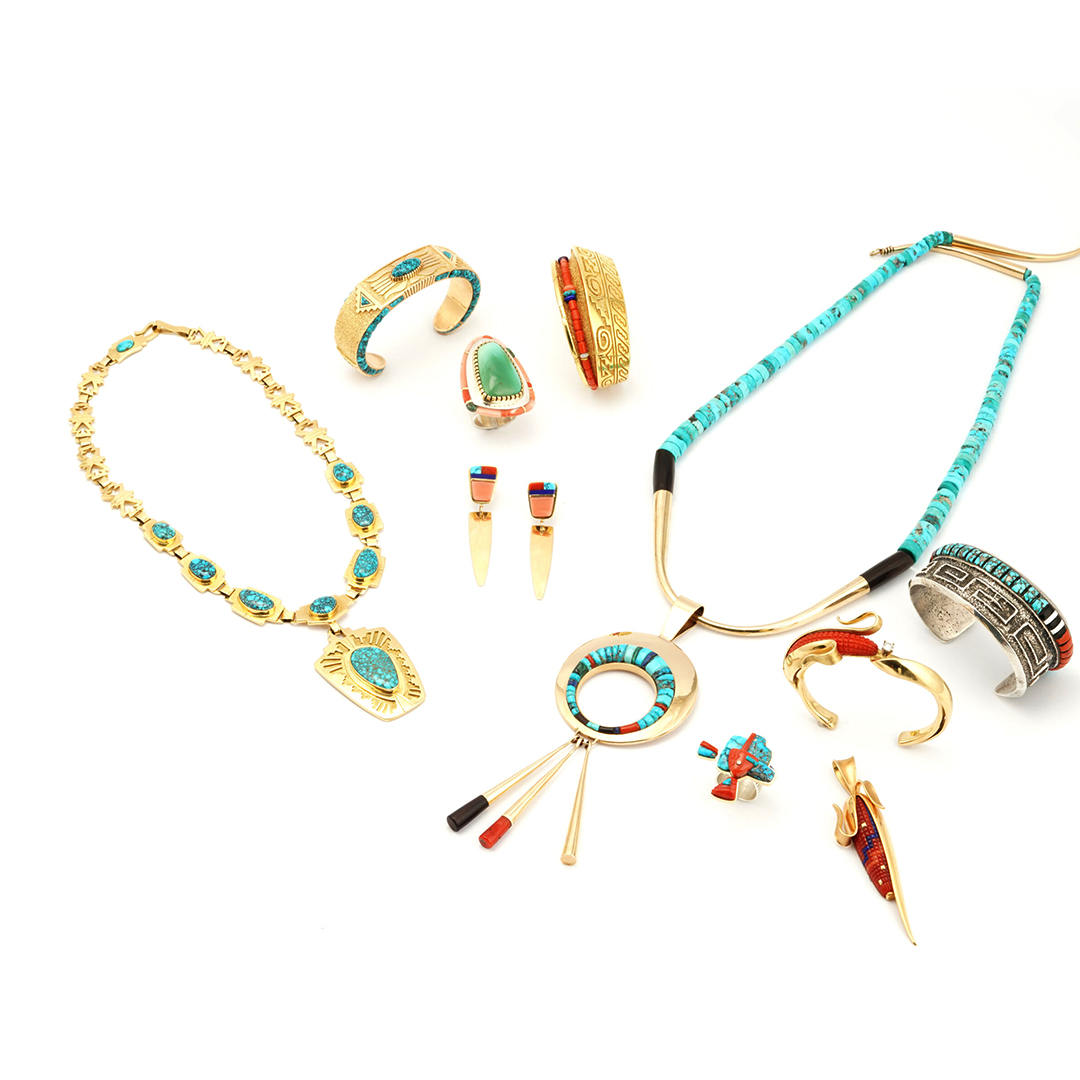
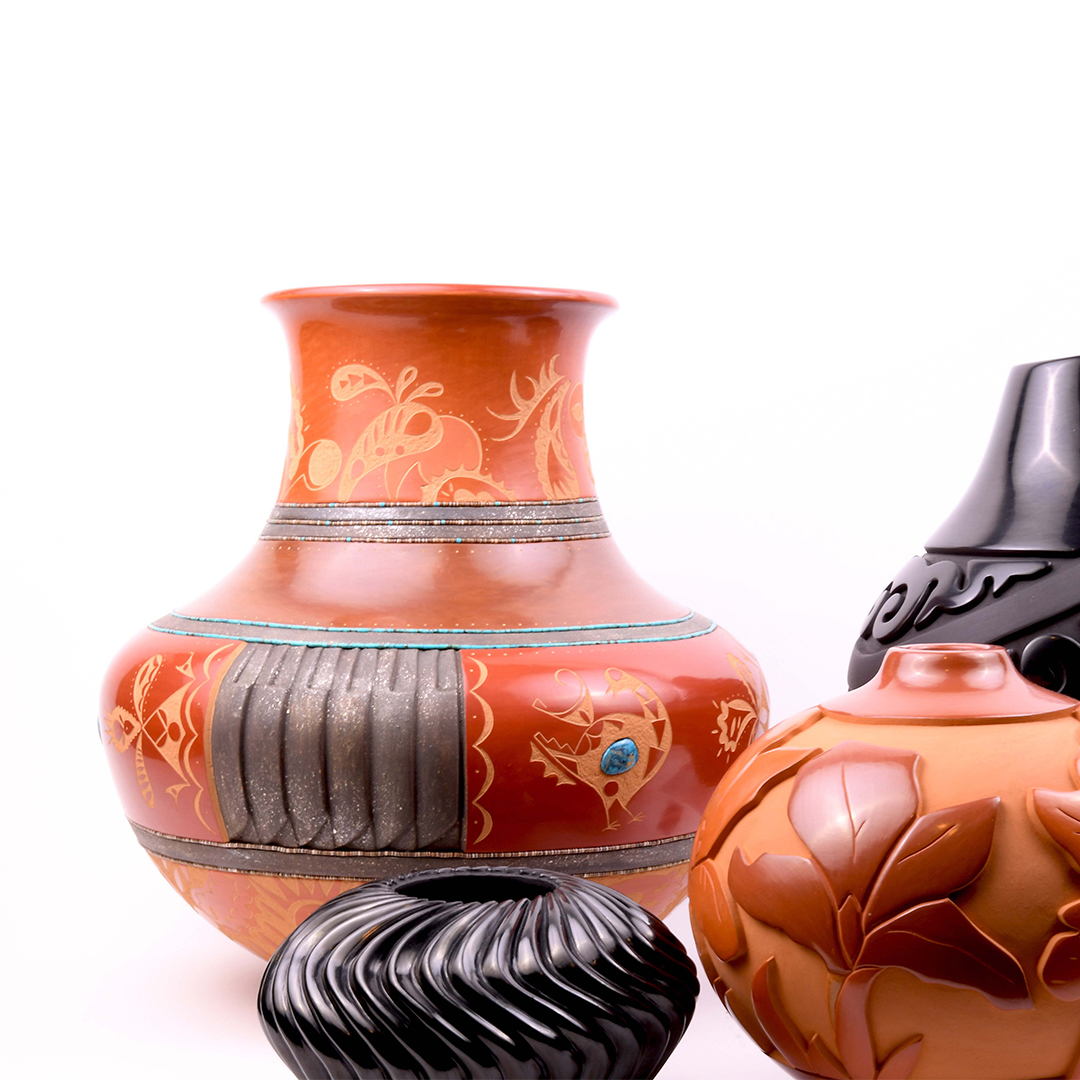
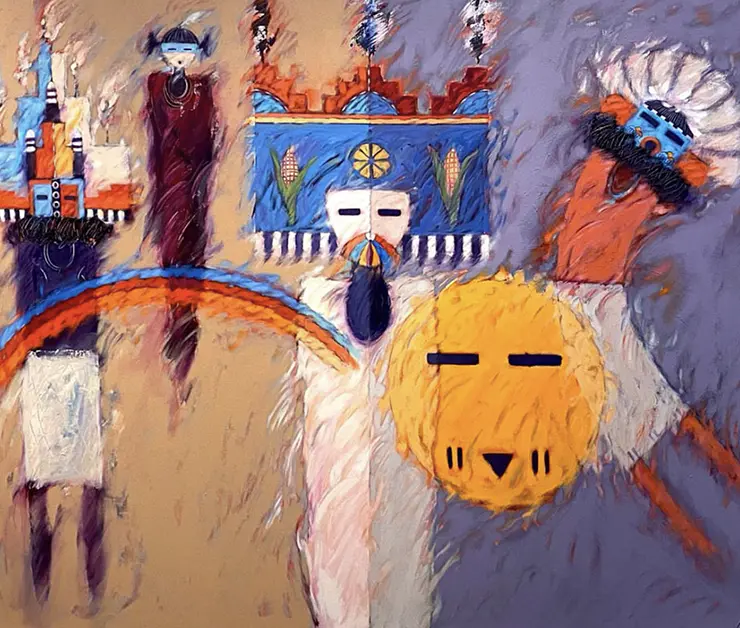
Faust Gallery represents the finest examples of American Indian art, showcasing exceptional contemporary Native American jewelry, sculpture, pottery, and painting by many of the top artists working today. With locations in Scottsdale, Arizona, and Santa Fe, New Mexico, the gallery is a trusted destination for collectors, institutions, and admirers of Indigenous art from across the globe.
Founded in 1996 by Bill Faust, the gallery is built on a deep family legacy and a lifelong commitment to celebrating the innovation, history, and enduring beauty of Native American artistry.
A Legacy Rooted in VisionLovena Ohl
The story of Faust Gallery begins with Lovena Ohl, Bill Faust’s great-aunt and one of the most influential figures in the modern appreciation of American Indian art. Lovena began her career as a buyer for the Heard Museum Gift Shop in Phoenix, where she played a key role in transforming it into one of the Southwest’s most respected showcases of Indigenous fine art. Her ability to identify talent, her respect for cultural heritage, and her commitment to excellence earned her widespread admiration. In 1978, she opened her own gallery and was later hailed by The New York Times as the “doyenne of American Indian Art.”
Lovena’s influence was transformative. Beginning in the 1960s, she was part of a wave of experts and collectors who recognized that Native American jewelry was evolving into contemporary wearable art. She championed artists who were pushing beyond tradition, and her gallery became a launchpad for many of the finest Indigenous jewelers and artisans of the 20th century.
In the PressFeatured Article
Faust Gallery and its artists have been profiled in regional and national publications over the years. A recent magazine feature is reproduced below.
Read the Magazine Feature
Tap any page to open it full size for easier reading.
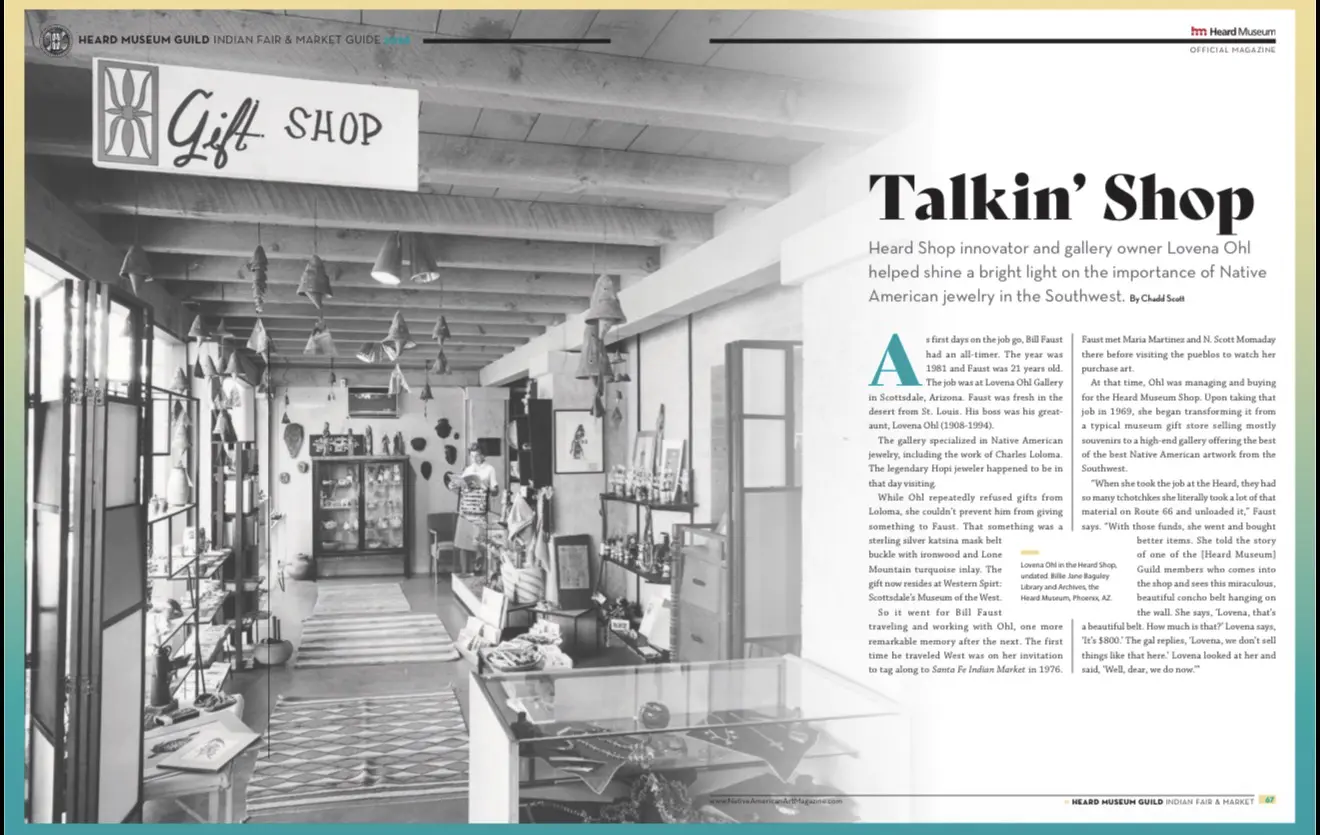
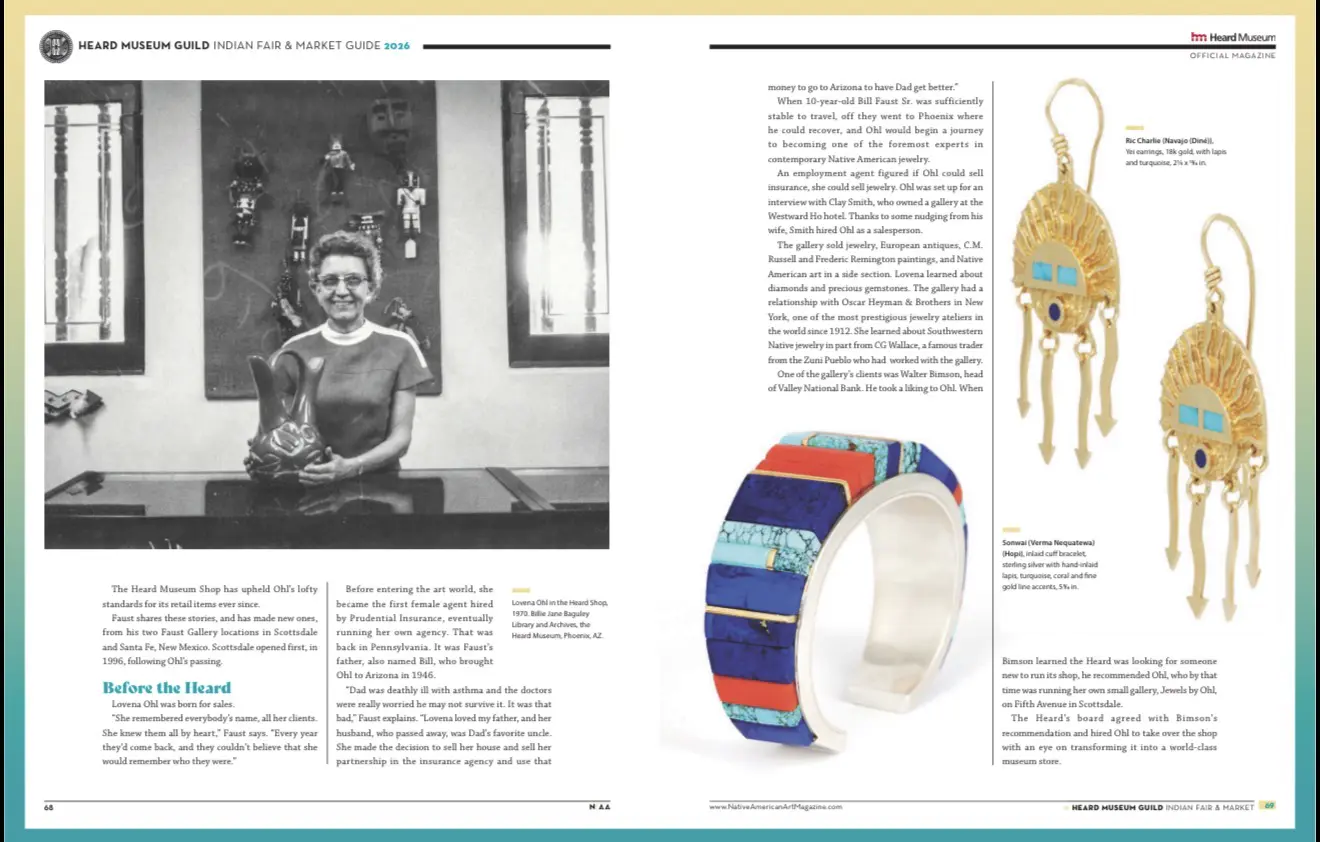
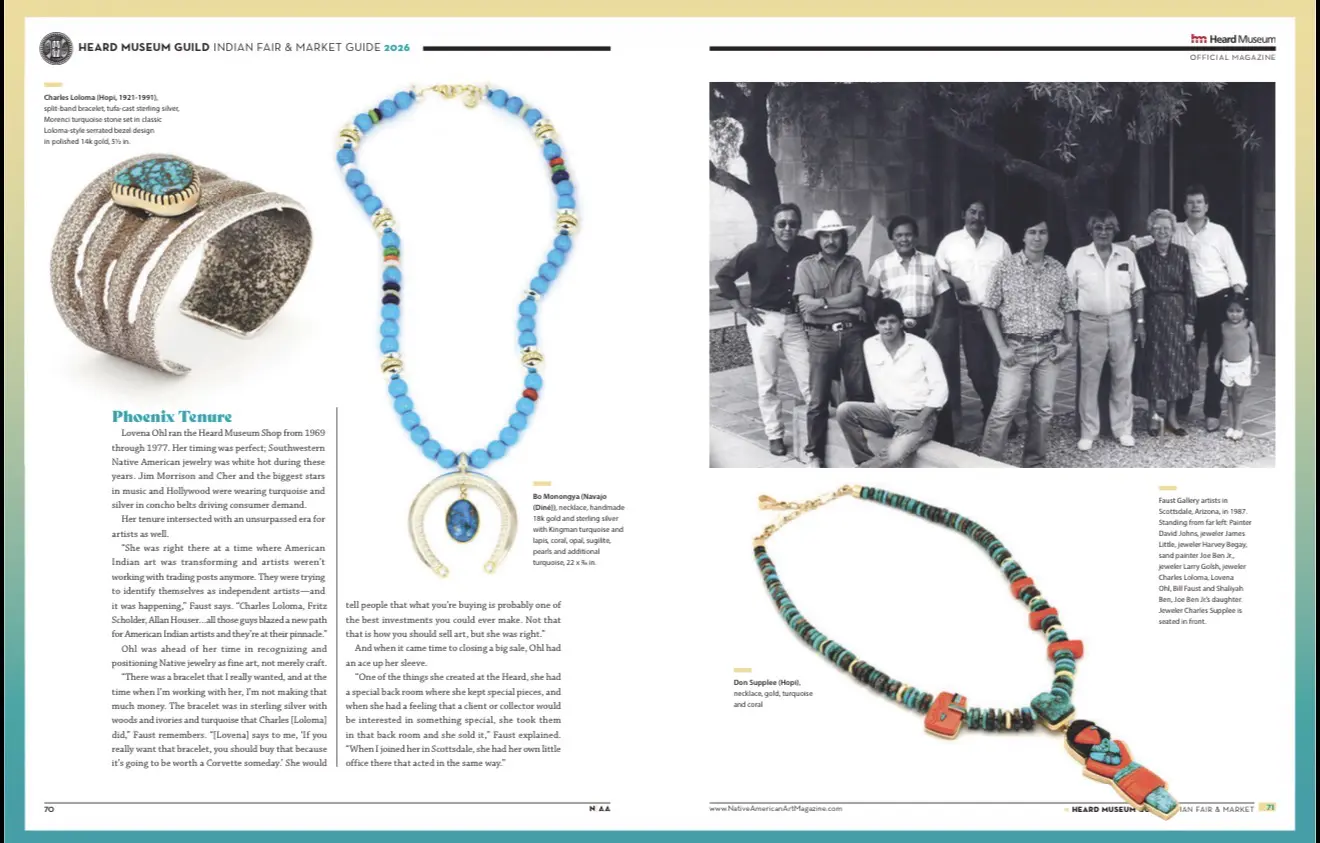
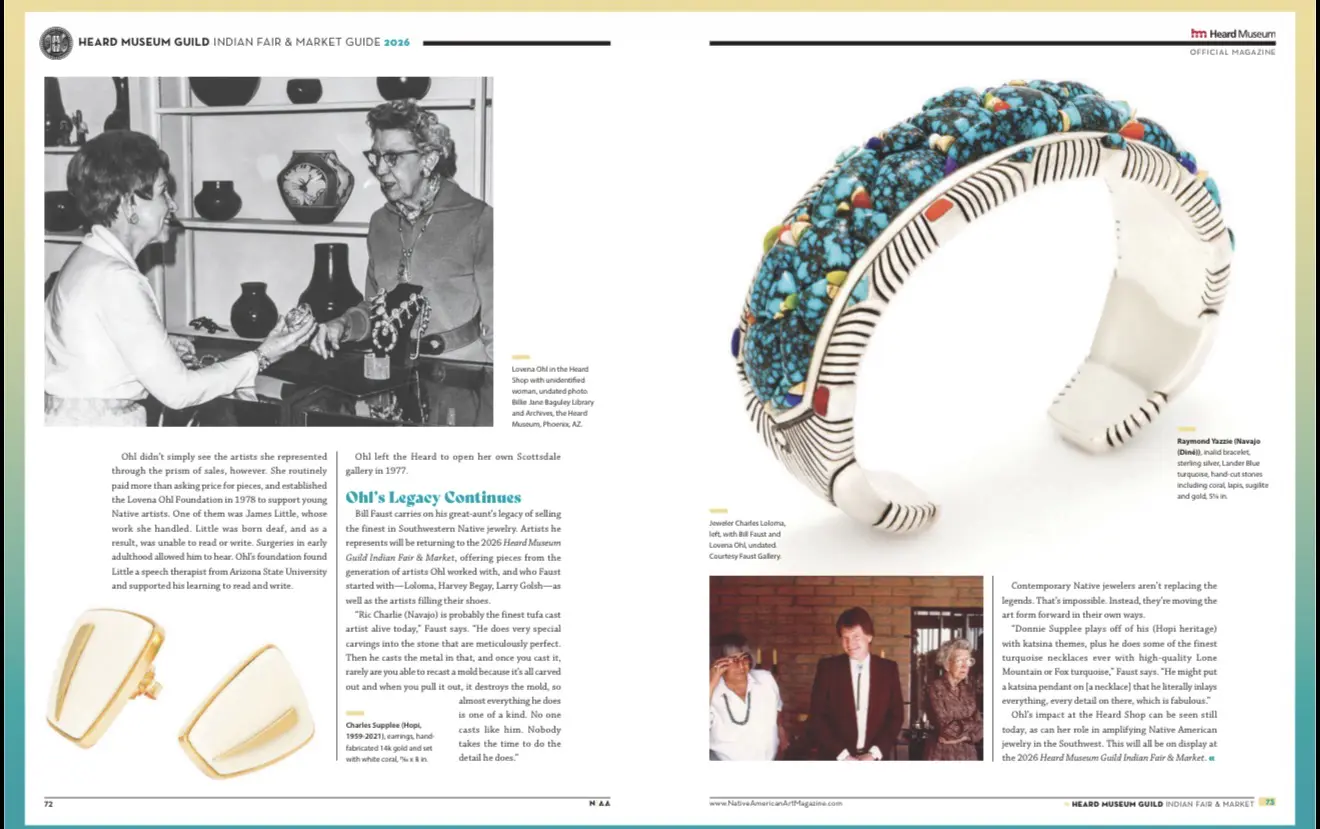
The Founding of Faust GalleryBill Faust’s Journey
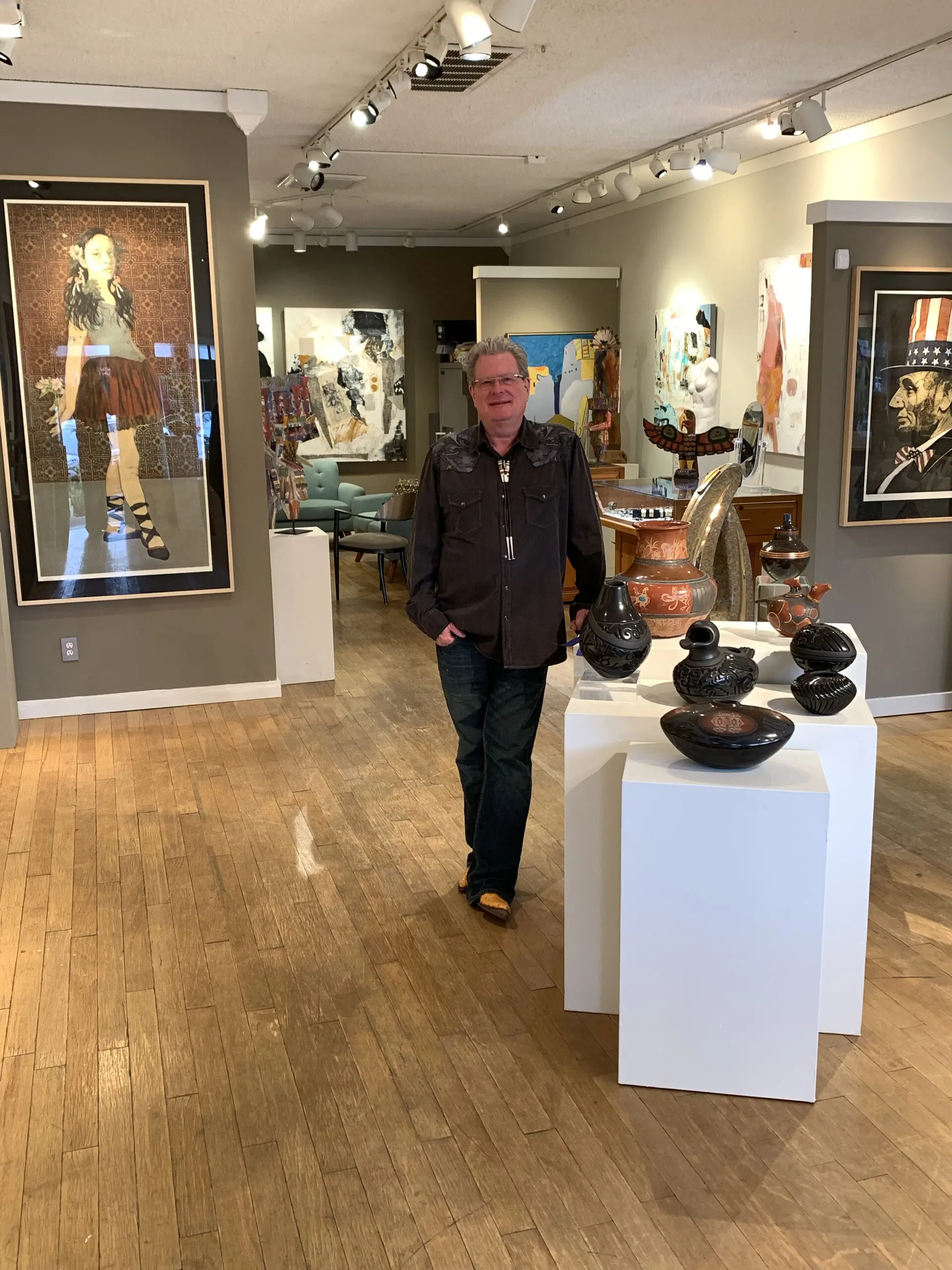
Bill Faust in the Scottsdale gallery, 2018.
Bill Faust’s journey into the world of American Indian art began in 1976, when he traveled to the Southwest with his great-aunt. Under Lovena’s mentorship, he developed close relationships with many Indigenous artists and museum professionals—connections that would shape his life’s work.
In 1996, following Lovena’s passing, Bill opened Faust Gallery to continue her legacy. He carried forward her core values: a deep reverence for Indigenous culture, a commitment to authenticity and quality, and a desire to present Native American art not as an artifact but as living, evolving fine art.
With 47 years of experience in buying, selling, and appraising Native American art, Bill Faust has become one of the most respected voices in the field. He has been a judge at leading art markets, including Santa Fe Indian Market and the Heard Museum Guild Indian Fair & Market, and a popular lecturer known for his depth of knowledge and engaging storytelling.
“Come explore the intersection of heritage and innovation, of timeless design and contemporary expression. Be prepared to be inspired.”
— Bill Faust II
A Focus on Contemporary Native JewelryFrom Tradition to Wearable Art
Faust Gallery has been instrumental in showcasing the evolution of American Indian jewelry from traditional to contemporary fine art. Since the 1960s, visionary artists have transformed silver and stone into cutting-edge, wearable masterpieces that blend cultural heritage with bold design innovation.
Bill Faust is especially proud of his long-standing relationship with Charles Loloma (1921–1991), a Hopi jeweler whose revolutionary designs were decades ahead of their time. Their friendship began in 1981, and Loloma’s influence continues to shape the gallery’s philosophy: bold, artistic expression that stands the test of time.
Faust Gallery has represented some of the most significant Native jewelers of the modern era, including:
- Charles Loloma
- Sonwai (Verma Nequatewa)
- Harvey Begay
- Larry Golsh
- Charles Supplee
- Don Supplee
- Carl Clark
- Ric Charlie
- …and many more
These artists exemplify mastery, vision, and technical brilliance. Their work fuses centuries-old techniques with modern forms, creating jewelry as culturally rich as it is aesthetically powerful.
Continuing the LegacySelection & Stewardship
Today, Faust Gallery continues to build on Lovena Ohl’s legacy by supporting artists whose work is not only skillfully made but also conceptually unique and culturally grounded. Bill seeks out artists who approach their craft with both historical awareness and creative innovation—makers whose art communicates across generations and borders.
Every object in the gallery is carefully selected for its authenticity, craftsmanship, and integrity. Whether it’s a museum-quality turquoise necklace, a hand-coiled Pueblo pot, or a dynamic mixed-media painting, each piece reflects the diversity and richness of Indigenous traditions and the bold future of Native American art.
More Than a GalleryA Cultural Experience
Faust Gallery invites collectors, scholars, and first-time visitors alike to experience the ongoing evolution of American Indian art. Through curated exhibitions, special events, and personal conversations, the gallery offers a deeper understanding of the stories, traditions, and talents behind every piece.
Come explore the intersection of heritage and innovation, of timeless design and contemporary expression. Be prepared to be inspired. Be prepared to be overwhelmed.
— Bill Faust II
In Bill Faust’s WordsRemembering the Artists
Across nearly five decades, Bill Faust worked alongside—and befriended—many of the artists who defined contemporary Native American jewelry. In his own words:
Charles Loloma (1921–1991)
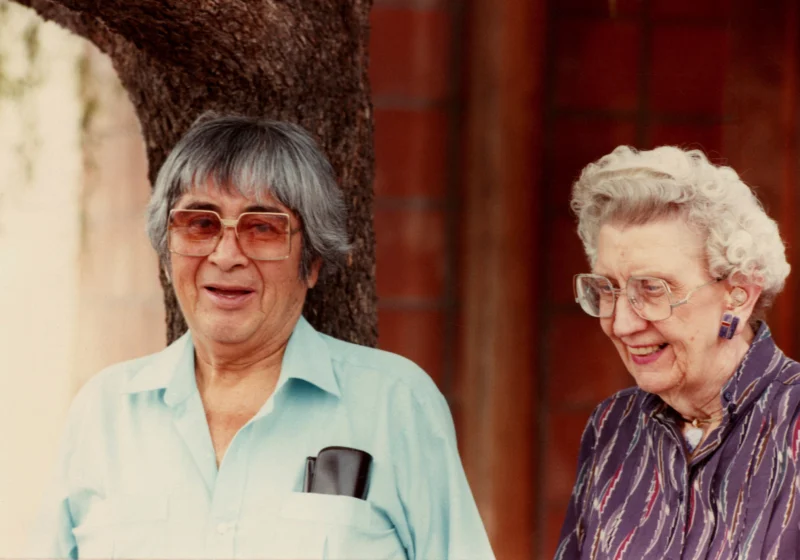
Lovena Ohl and Charles Loloma, 1987.
I remember the time before I met Charles Loloma. Lovena would often visit our family in Chicago wearing his stunning jewelry, and I was always captivated by their beauty. In 1981, at 21 years old, I moved to Arizona to work at Lovena’s gallery in Scottsdale. On my first day, Charles and Georgia Loloma came to see Lovena to discuss new pieces. Lovena never accepted gifts from Charles, so he turned to me and said, “Bill, I can never get Lovena to take a gift, but she can’t stop me from giving you anything.” That’s when he presented me with a sterling silver Kachina Mask belt buckle with ironwood and Lone Mountain turquoise inlay. This belt buckle is currently on display at Western Spirit: Scottsdale’s Museum of the West for everyone to see.
In 1982, I had my first show with Charles. He was an amazing teacher and salesman—he had attended the Dale Carnegie Schools of Salesmanship, and I’ll never forget the time a woman admired a ring in the case, tried it on, and it was a perfect fit. Charles said, “Well, now I made that special just for you,” and she bought it!
I visited Hopi at Charles’s studio and learned a lot about how he created his jewelry. Many people think his bracelets were all made through lost-wax casting, but that wasn’t the case; he either hand-fabricated or tufa cast them. Whenever Charles met people in the gallery, I remember his talent for sketching jewelry pieces on paper to show how they would look before creating them—a great visual aid.
I worked with Charles, and we were friends for over ten years until he passed away in 1991. I adored Charles; he was so good to Lovena and me. He shared beautiful stories about Hopi culture and the significance of each piece he created. I still experience Charles’s artistry through the pieces people bring to the gallery, and through his niece Sonwai, who continues to showcase her jewelry in my galleries today.
— William Faust II
James Little
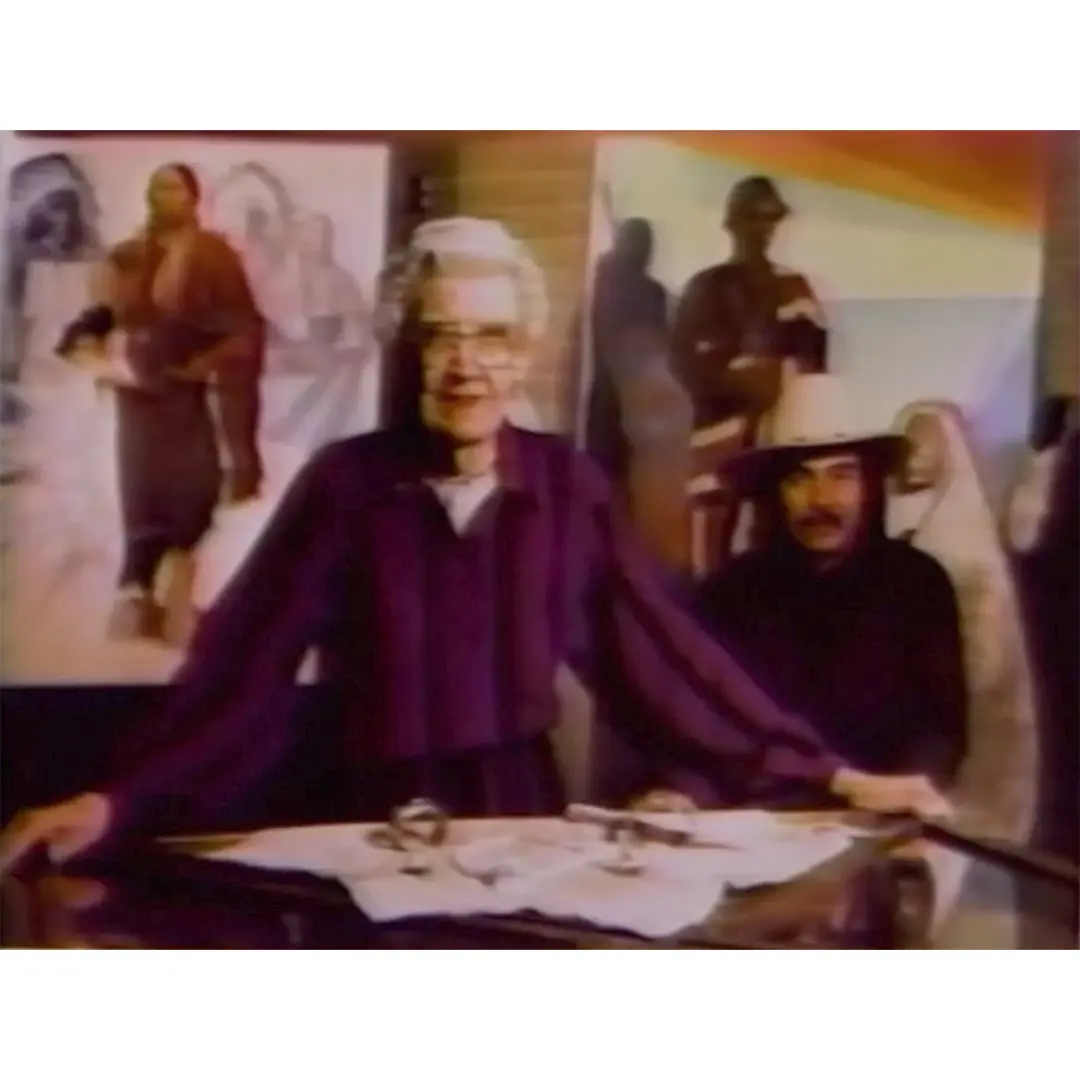
Lovena Ohl and jeweler James Little in the Lovena Ohl Gallery.
James Little has one of the most heartfelt stories among all the artists I have worked with. At a young age, he was sent to a boarding school, where it was discovered that he was deaf. Unable to provide him with the necessary support, they sent him back home to Pinon, Arizona, where he became a sheepherder with his family. His brother noticed that James had a talent for carving wood while tending the sheep, and managed to get him enrolled at Navajo Community College so he could explore every art possibility.
There James crossed paths with Kenneth Begay, a famous jeweler and teacher who took an immediate interest in him and taught him the art of silversmithing. After graduating, James worked at a shop in Flagstaff, Arizona, where a doctor and his wife met him and noticed his inability to hear. Over the years, the doctor persuaded James to move to California for treatment, and after five operations his hearing significantly improved.
In the late 1970s, James found success making jewelry in California, attending shows and winning ribbons for his work. A friend sent images of his jewelry to Jerry Jacka and Arizona Highways magazine, asking where James might showcase his work in Scottsdale. This led to a meeting with Lovena Ohl, who purchased all of James’s pieces—and, after discovering he couldn’t read or write, offered to help. Through her foundation she provided a speech therapist from Arizona State University, who spent six years teaching James to read and write.
Today, James Little is celebrated as one of the finest American Indian silversmiths. What sets him apart is the intricate Navajo symbolism in his pieces and the high-quality materials he uses. Phoenix Home & Garden has even dubbed him “A Master Jeweler.” I continue to work with James to this day, 45 years after his first encounter with Lovena.
— William Faust II
Larry Golsh
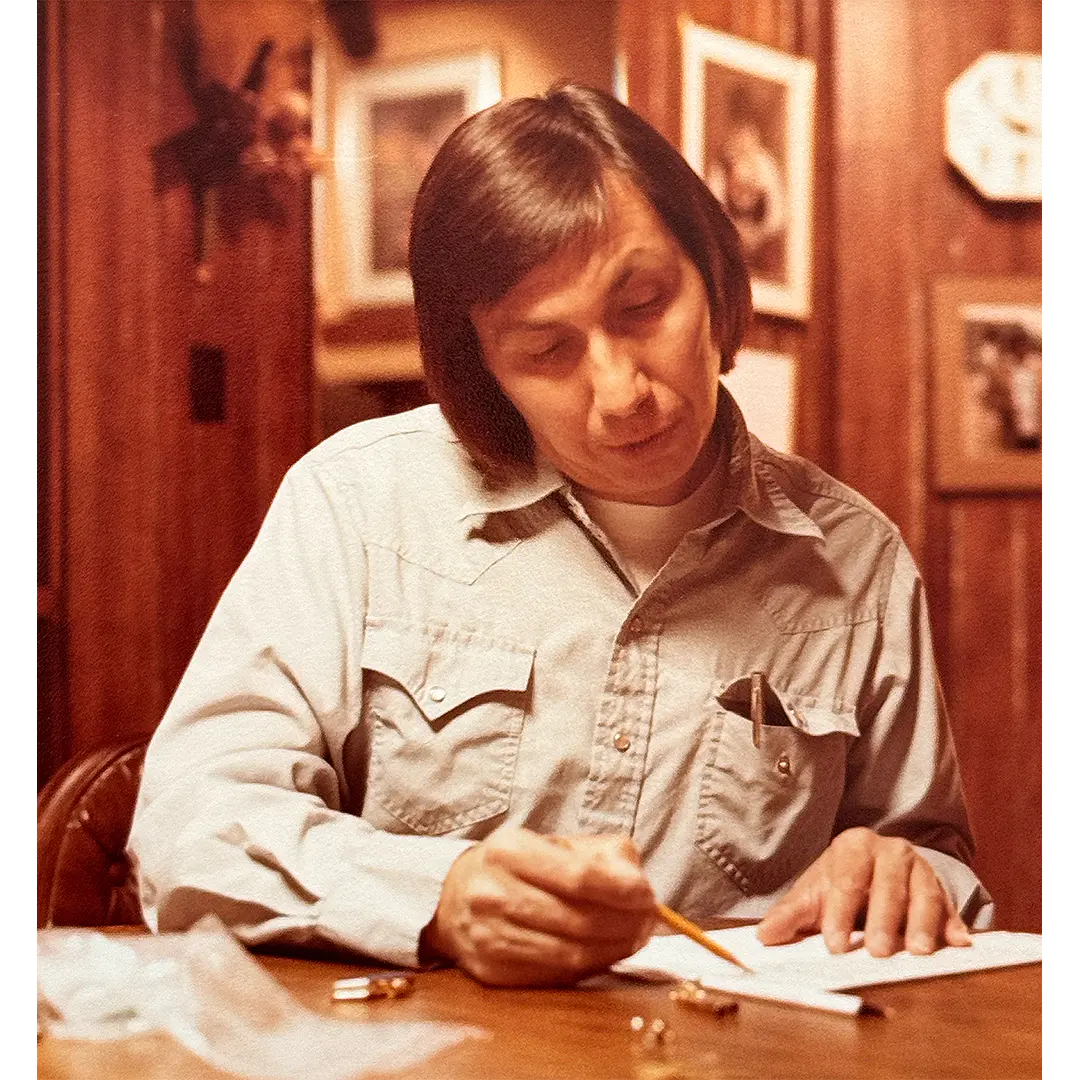
Larry Golsh sketching jewelry designs.
The National Geographic article of September 1981 features Charles Loloma, Larry Golsh, and Harvey Begay. The piece on silver claimed that Larry Golsh would be the heir apparent to Charles Loloma—and in many respects, this is true.
Larry Golsh’s jewelry is a testament to his creativity and unconventional approach. He pioneered a style in which he delighted in placing stones in an asymmetrical format, a characteristic that sets his work apart—rarely do you see anything Larry made that is symmetrical. His use of high-quality turquoise and other gemstones, including diamonds, was influenced by Pierre Touraine, and the results are exceptional. Larry’s work included special orders for fine jewelry with pavé diamonds and onyx that matched anything Tiffany’s or Harry Winston could master, and his contemporary designs incorporated the work of Münsteiner, the famous gemstone cutter.
— William Faust II
Harvey Begay (1938–2009)
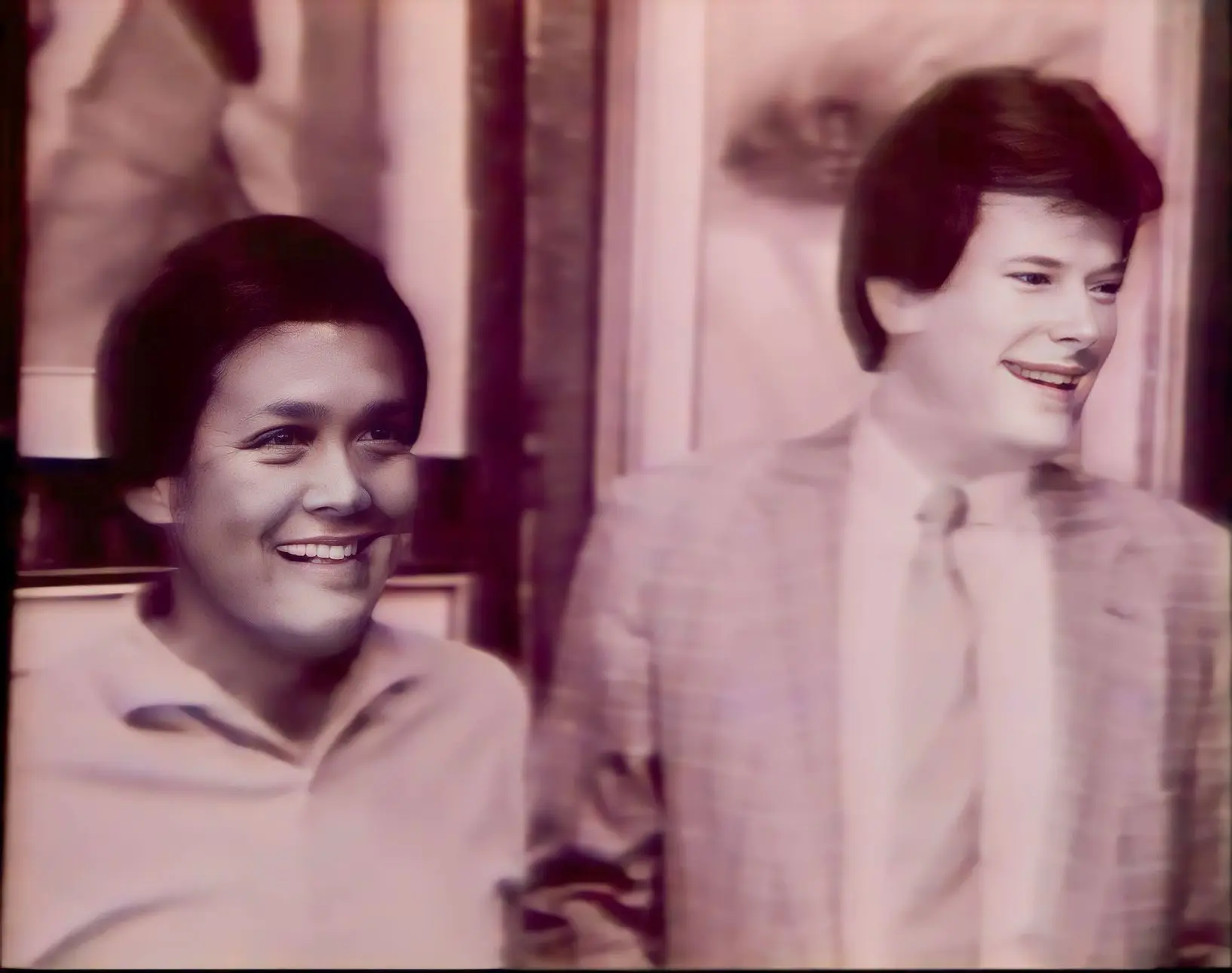
Harvey Begay and William Faust II inside the Lovena Ohl Gallery.
Harvey Begay was born in 1938 in Tuba City, Arizona, the son of Kenneth Begay, who was often referred to as the Charles Loloma of Navajo jewelry. When Kenneth became a partner in The White Hogan, a shop in Scottsdale, Harvey attended Scottsdale High while his father worked there. He went on to graduate from Arizona State University with a degree in aerospace engineering in 1961, became a Navy flight officer, and was a test pilot for McDonnell Douglas in St. Louis, testing the Phantom jet. During one test flight, Harvey had to eject due to electrical power failure—and was lucky enough to survive.
Following that life-altering crash, Harvey felt a strong pull to return to his roots in silversmithing with his father, leading him to Steamboat, Colorado. In 1979, he made his way back to Phoenix, Arizona, where he began a fruitful collaboration with Lovena Ohl. A memorable moment came when Lovena asked Harvey to make sterling silver goblets; having never made goblets before, he initially declined. Lovena encouraged him, saying he was as talented as his father. Harvey eventually made them, and they turned out stunning.
Harvey was among the first jewelers to use lost-wax designs with extreme detail and to create a high-end line of hand-fabricated, one-of-a-kind museum pieces. Over the years he evolved into a sophisticated jeweler whose work exemplified wearable art. Sadly, Harvey passed away in 2009, leaving behind cherished memories of his exceptional friendship and artistry. Before his passing, he established the Harvey A. Begay Memorial Scholarship at Arizona State University, which helps American Indian undergraduate students pursue their degrees and is still active today.
— William Faust II
The Next GenerationMichael Faust, Gallery Director
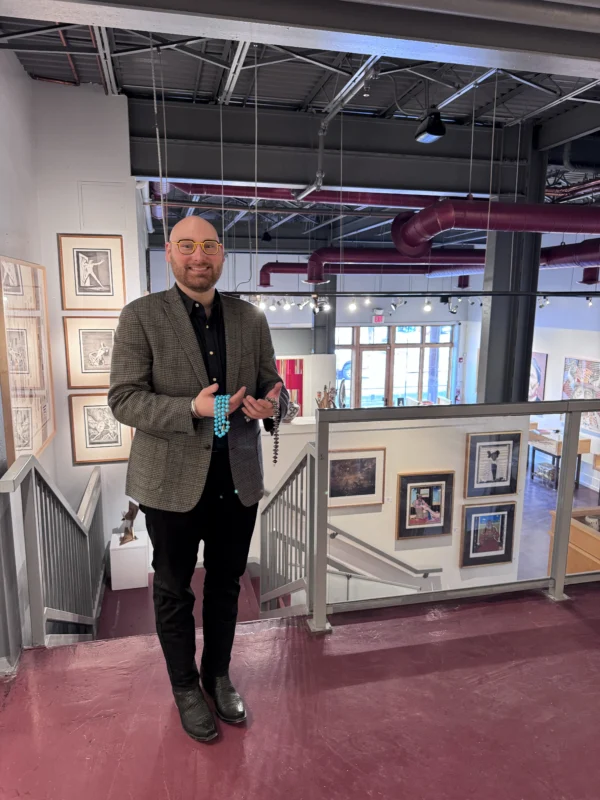
Michael Faust, Gallery Director.
Michael Faust was born on March 20, 1996, in Scottsdale, Arizona, into a family deeply rooted in the arts through the pioneering legacy of his great-great-aunt, Lovena Ohl—the first buyer and manager of the renowned Heard Museum shop in Phoenix. That connection deepened when his father began working in her gallery in 1982. In 1996, the same year Michael was born, his father established Faust Gallery, marking the beginning of its enduring legacy.
From a young age, Michael was immersed in the vibrant world of art, spending countless hours at his father’s gallery, attending shows, and meeting artists. That early exposure cultivated both his appreciation for art and a deep understanding of the gallery business.
Over the past decade, Michael has grown from a youthful observer into a central figure in the family business. For the past ten years he has worked full-time at Faust Gallery, where he now serves as Gallery Director—overseeing photography, website management, and social media outreach, and modernizing the gallery’s presence to reach a broader audience. Looking ahead, he aims to keep growing Faust Gallery while honoring both his family legacy and his own path forward.
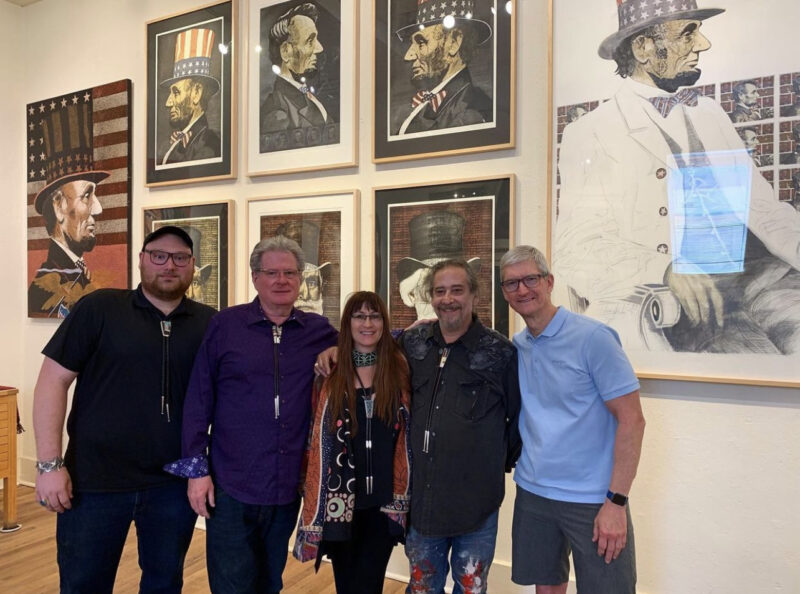
Santa Fe Indian Market, August 2019 — Michael Faust, Bill Faust, Charlie Lasansky, Tomas Lasansky, and Tim Cook.
View More Categories