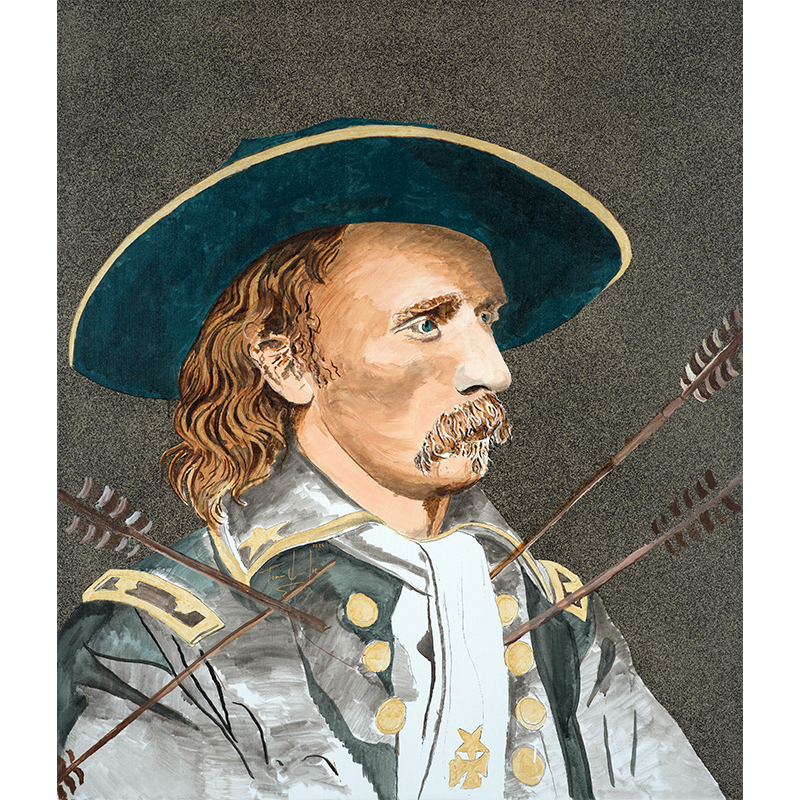
Lasasnky, Tomas “Last Stand” Painting On Canvas

Lasasnky, Tomas


“Last Stand” is a powerful original painting by American artist Tomas Lasansky, completed in 2025. Measuring 55 x 47 inches, this acrylic on canvas depicts General George Armstrong Custer at his death during the Battle of the Little Bighorn—an iconic clash between U.S. forces and Native resistance.

Portrayed with arrows piercing his chest, Custer is reimagined not as a hero but as a symbol of colonial violence. Lasansky challenges romanticized depictions of westward expansion and invites viewers to reconsider whose stories are told in American history.

Born in Iowa City and trained under his father, master printmaker Mauricio Lasansky, Tomas has built a career exploring justice, identity, and cultural memory through iconic portraiture. His work frequently honors Native American leaders such as Sitting Bull and Geronimo, positioning them with dignity and historical clarity.


Title: “LAST STAND”,

Medium: Painting on Canvas

Dimensions: 55×47″

C. 2025

POR


Tomas Lasansky

American Artist · Master of Portraiture
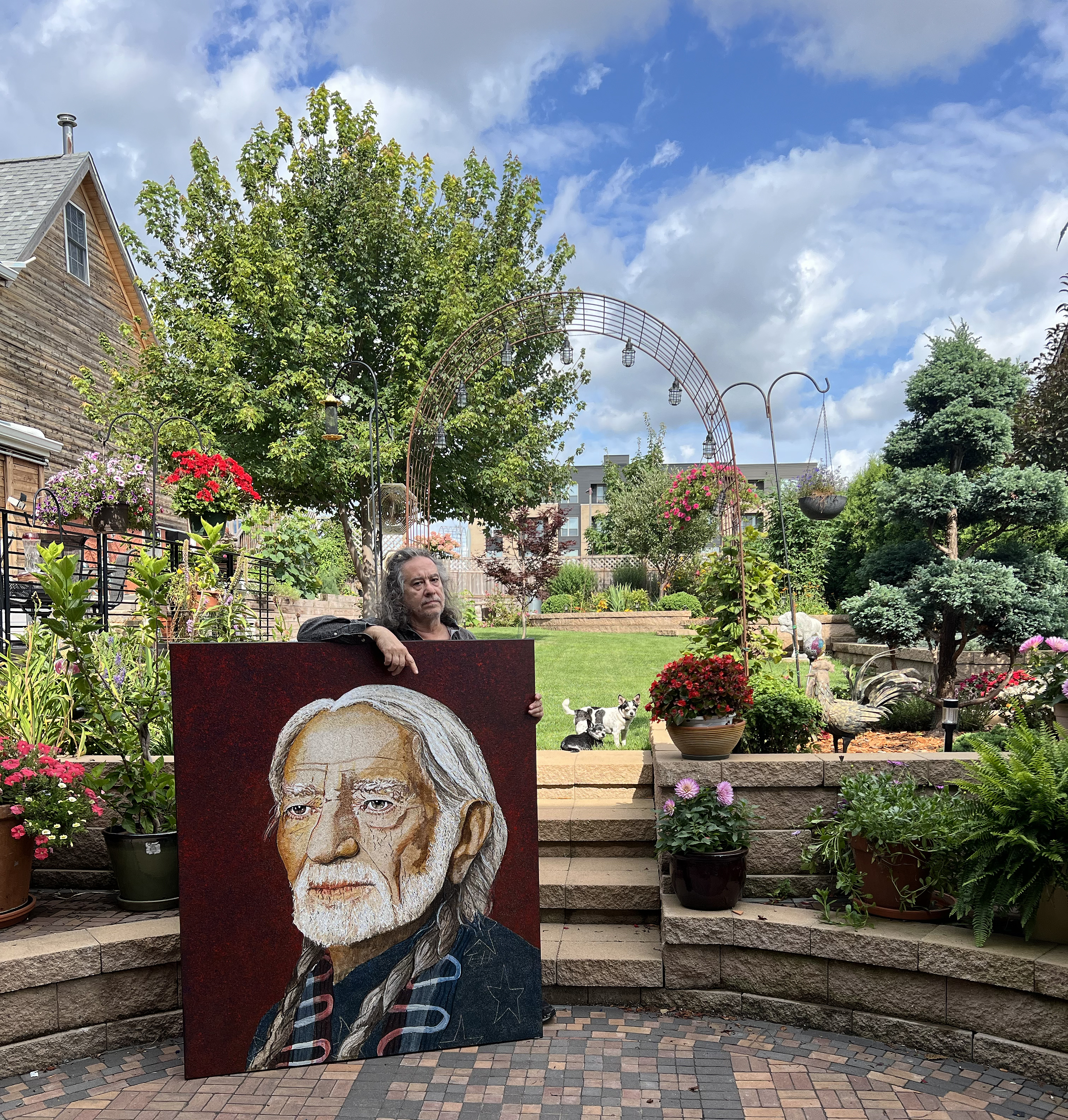
Tomas Lasansky in his studio garden with a splatter painting of Willie Nelson

Tomas Lasansky in his studio garden

Tomas Lasansky is an acclaimed American artist known for his emotionally charged portraits of cultural and historical icons—Sitting Bull, Geronimo, Lincoln, Frida Kahlo, and more. The youngest son of legendary printmaker Mauricio Lasansky, he works in a fusion of drawing, painting, intaglio printmaking, and collage, carrying forward one of the great traditions of American art.

Among his most distinctive methods is his signature splatter technique. Rather than relying on the traditional brush, Lasansky builds his images by flicking, throwing, and splattering pigment onto the surface, often working the paint onto the linen with his fingers—lending his portraits a tactile, almost sculptural energy.

"Tomas' work is excellent. He has emerged as a severe force in Southwest art with the new paintings."

— William Faust, Faust Gallery
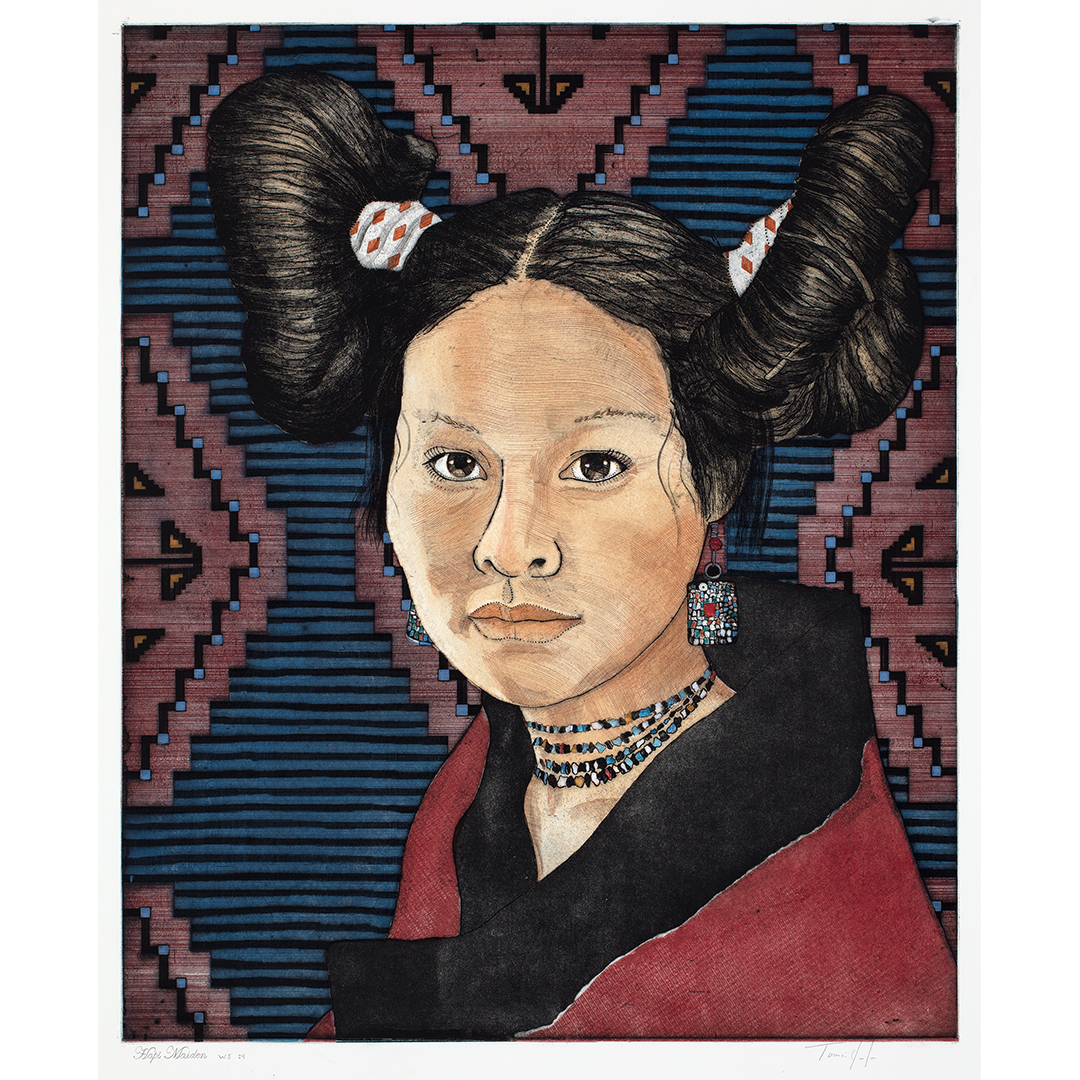
Hopi Maiden, a color intaglio print by Tomas Lasansky

Intaglio print by Tomas Lasansky of Hopi Maiden

How to Measure a Painting for Your Space

Before purchasing a painting, measure the width and height of the wall area where you plan to place it. Also note any nearby furniture, windows, doorways, or architectural features that may affect how the work fits visually.

If the painting will hang above a sofa, bed, console, or mantel, measure the furniture as well. A common design guideline is to choose artwork that is about two-thirds to three-quarters the width of the furniture below it, though this can vary depending on the look you want.

Be sure to review the painting’s full dimensions, including the frame and depth, since these affect how much space the piece will occupy. To help visualize the scale, mark the artwork’s dimensions on the wall with painter’s tape.

When hanging the work, a common starting point is to place the center of the painting around 57 to 60 inches from the floor, adjusting as needed for furniture placement, ceiling height, and the proportions of the room.

If you are local to Santa Fe or Scottsdale, we are happy to assist with delivery and place the painting in your home so you can see how it looks in the space. This allows you to experience the scale, presence, and placement of the work before making your final decision.