Faust Gallery · Pottery
White Stoneware
High-Fired Clay · Dense, Durable, Made to Be Used
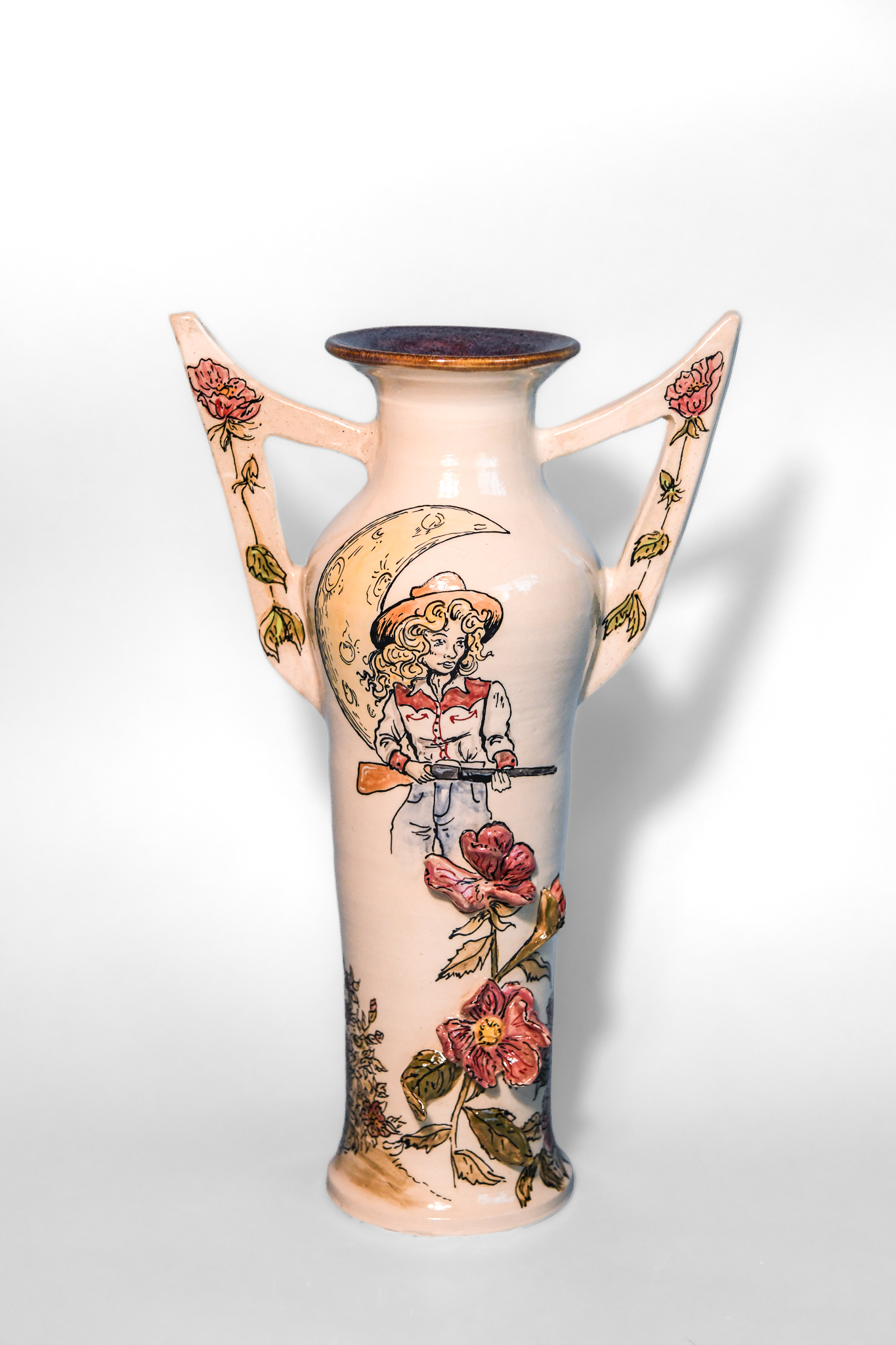
Stoneware is clay fired hot enough to become dense, hard, and nearly waterproof. White stoneware is made from clay with very little iron, so it fires to a pale, clean surface—an ideal ground for painting, glaze, and fine detail. Its strength is why stoneware has been used for centuries for both everyday vessels and works of art.
What Makes It Stoneware
The difference between kinds of pottery comes down to the clay and the heat of the kiln. Stoneware is typically fired between about 1,200°C and 1,300°C (roughly 2,200°F to 2,370°F). At those temperatures the clay partly vitrifies—its particles begin to fuse into glass—leaving a body that absorbs less than one percent of its weight in water, even before it is glazed.
- Earthenware Fired lower, usually below about 1,150°C. Porous unless glazed, and more easily chipped.
- Stoneware Fired higher. Dense, strong, opaque, and nearly waterproof.
- Porcelain Made largely from kaolin and fired hotter still. Fully vitrified, and often translucent when thin.
How It’s Made
- 01 Forming. The clay is wedged to remove air, then thrown on the wheel or built by hand.
- 02 Trimming and sculpting. At the leather-hard stage the piece is trimmed, and handles or sculpted details are attached.
- 03 Decorating. Many artists paint directly on the raw or bisqued clay with underglaze, colored clay-based pigments that hold fine line and detail.
- 04 Bisque firing. A first, lower firing hardens the clay so it can be handled and glazed.
- 05 Glaze firing. Glaze is applied and the piece is fired to full stoneware temperature, where the clay densifies and the glaze melts into a glassy surface.
A Brief History
High-fired, glazed ceramics appear in China more than 3,000 years ago, and Chinese potters produced stoneware on a large scale over the centuries that followed. In Europe, potters in Germany’s Rhineland were making stoneware by the 1300s and perfected salt-glazed wares by the late 1400s.
England became a leading maker of fine stoneware in the 18th century. Staffordshire potters developed a refined white salt-glazed stoneware, and in the late 1700s Josiah Wedgwood introduced Jasperware. In 19th-century North America, salt-glazed stoneware crocks and jugs were the household standard. In the 20th century, studio potters took up stoneware again, prizing it for its strength and for the way it carries glaze and painted surface.
Living with Stoneware
Stoneware is among the most durable kinds of pottery, and many contemporary pieces are made to be used. Because each artist’s clay, glazes, and surface decoration differ, ask us about care for any individual piece—especially hand-painted or sculptural work—before using it for food, washing it, or placing it in an oven or microwave.