The Corn Mother carries great significance in American Indian cultures, embodying fundamental elements of life, nourishment, and cultural heritage. She serves as a representation of the Earth’s bountifulness and fertility, encapsulating the nurturing and life-sustaining attributes of corn. The Hopi Origin Story and Traditions originate with the powerful Emergence story. Each Hopi clan possesses different animals, which emerged from the third way of life and transitioned into the fourth. The Hopi people recount numerous tales of being bestowed corn kernel and water by Màasaw, the Master of the Third World. Upon entering the Fourth World, people were presented with corn. While many selected the largest cobs, the Hopi purposely chose the smaller cobs to showcase their humility. In response, the Great Spirit granted them their language and the group name “Hopi,” signifying peaceful little ones. Hopi life revolves around agriculture, particularly corn, which embodies humility, cooperation with the Earth God, respect, and stewardship of Earth.There are five brightly colored types of corn grown on the Hopi reservation still today. You may see jewelry, paintings, pottery, sculpture, and other media of corn. There are many different meanings behind this symbol: the six geographical directions:
Yellow (Daguz Qa-o): Northwest
Red Corn (Bala Qa-o): Southeast
Blue Corn (Sagwab Qa-o): Southwest
- Piki Bread
- Cookies
- Tortillas
- Corn Meal
White Corn (QoojaQa-o): Northeast
- Dried to use kernels to make hominy through boiling.
- Whole dried kernel mixed with bean sprouts for the Bean Dance.
- Used as tamal dough.
- Can be used for cornmeal
Purple: Up, Speckled: Down
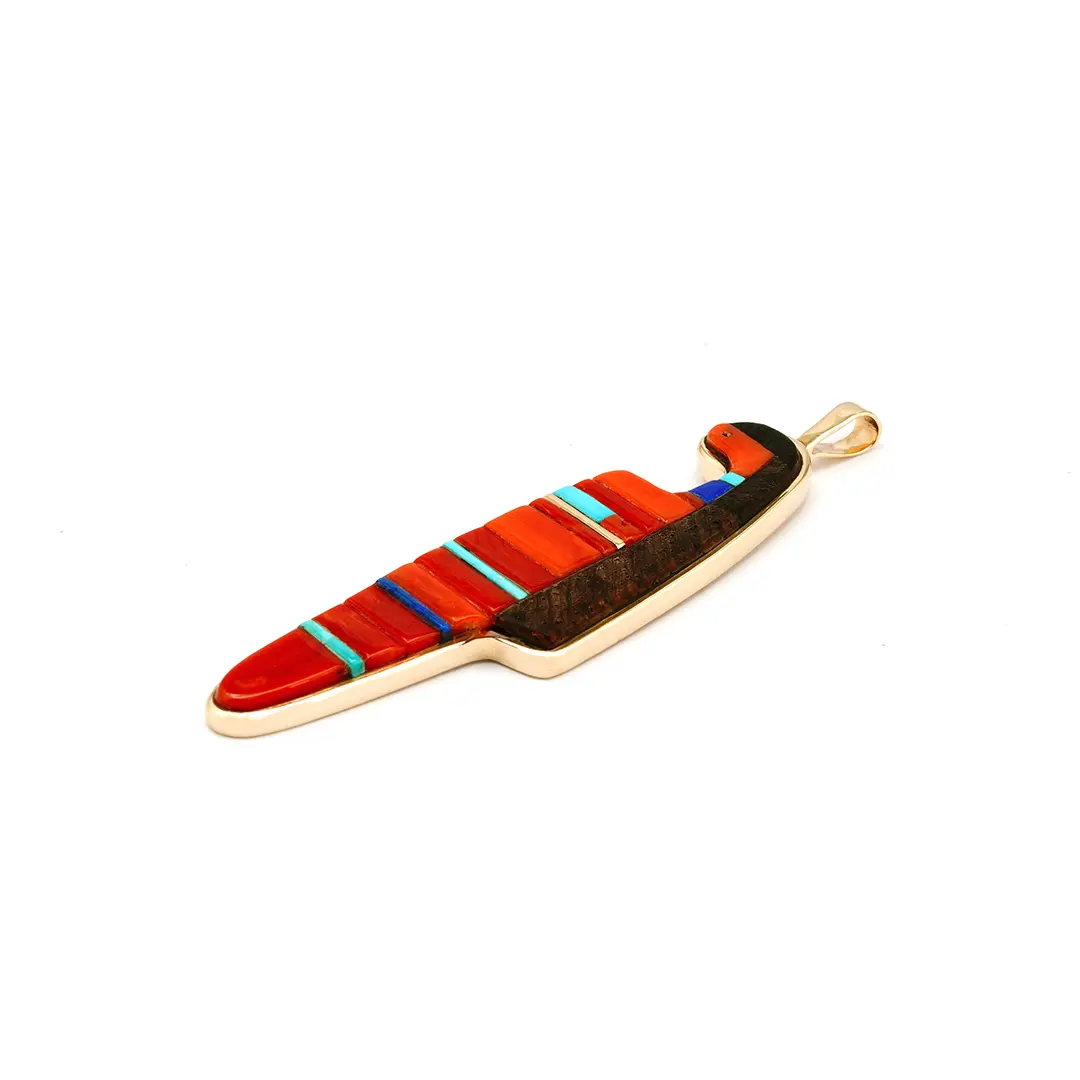
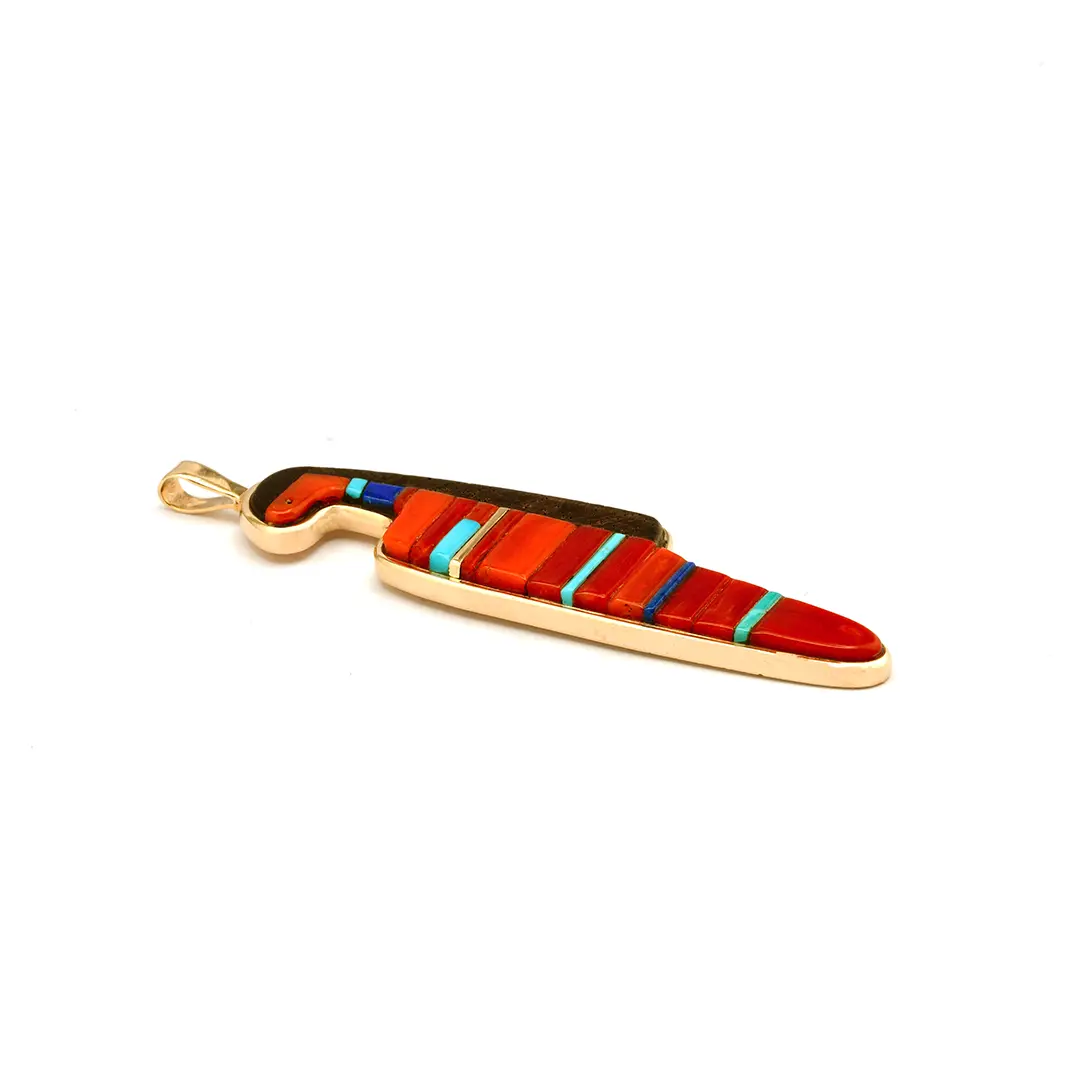
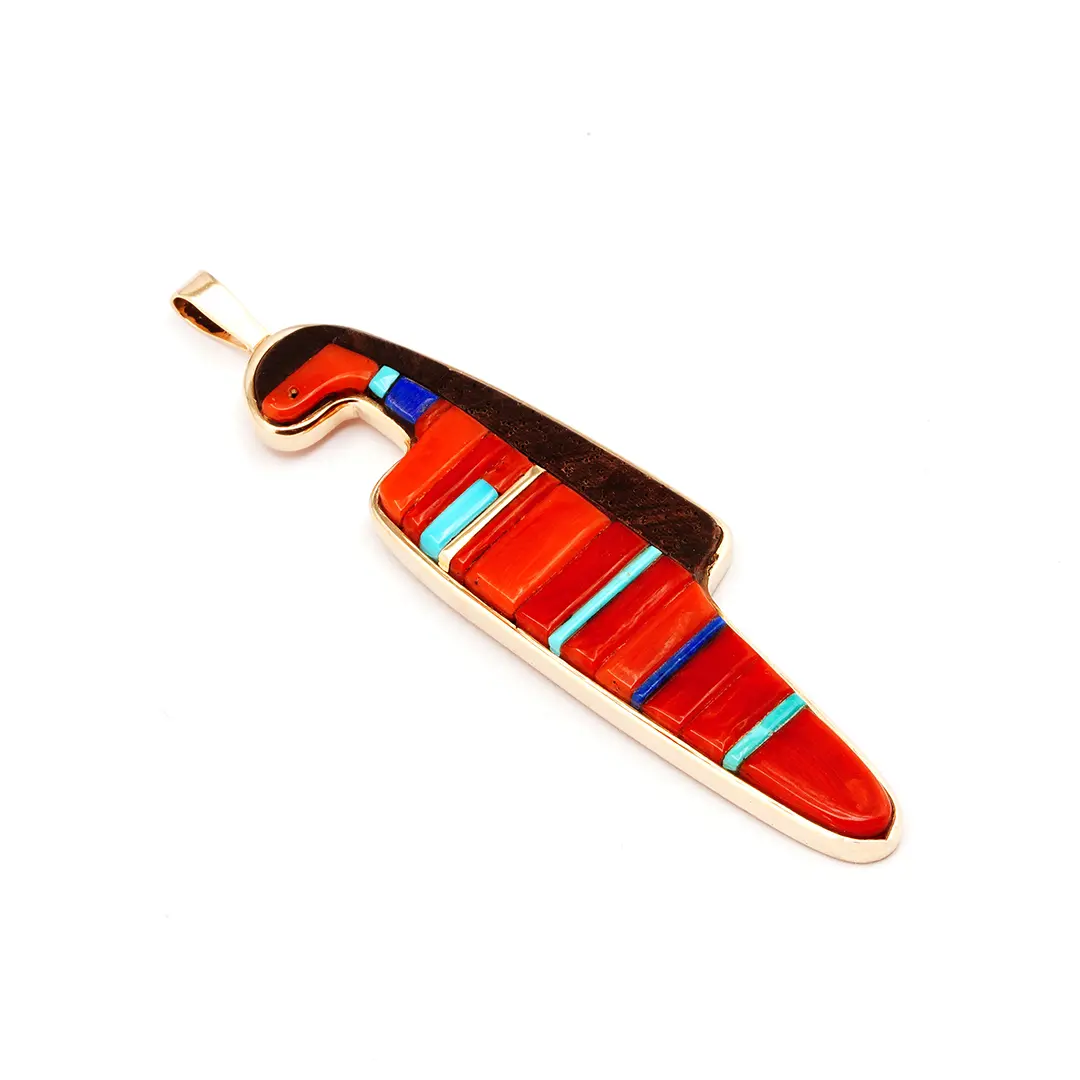
One of Charles Loloma’s most unique jewelry pieces is the Corn Maidens. Although some people might think they resemble quails, they actually represent a Hopi Maiden. Her presence in the Kachina dance is a prayer for corn, honoring Mother Earth and her ability to feed her children. This Corn Maiden, a 14k gold pendant, is adorned with coral, turquoise, lapis, and ironwood. Charles rarely added hair to his Maidens. William Faust II
 Charles Loloma 14k gold and sterling silver “Corn Row” or “Ear Of Corn” bracelets from the 1970s.
Corn is at the heart of Hopi life and rituals. It is the sustenance of the Hopi people, physically and spiritually, and is integrated into every aspect of their lives. Corn is used in many ways to create food, from piki bread to blue corn dumplings (pevelpiki). The corn is used to make ceremonial hominy stew, to wrap cornmeal with various meats using the leaves, to create various types of ground corn puddings using the husks, and to wrap prayer feathers. The kernels are ground into fine cornmeal used in countless dishes. It is rare to find a Hopi meal that does not include corn. A perfect ear of white corn is placed with a newborn baby to symbolize the Hopi connection to corn. A child is given another perfect ear of white corn during their initiation. Cornmeal is used for prayer, to feed the spirits, and in every ceremony. The ceremonies and prayers are for moisture to ensure good crops of corn and other vegetables to sustain Hopi life. And finally, at the end of life, cornmeal is used to send a person off on their journey to the next world.Sonwai (Verma Nequatewa)