Faust Gallery
Charles Loloma
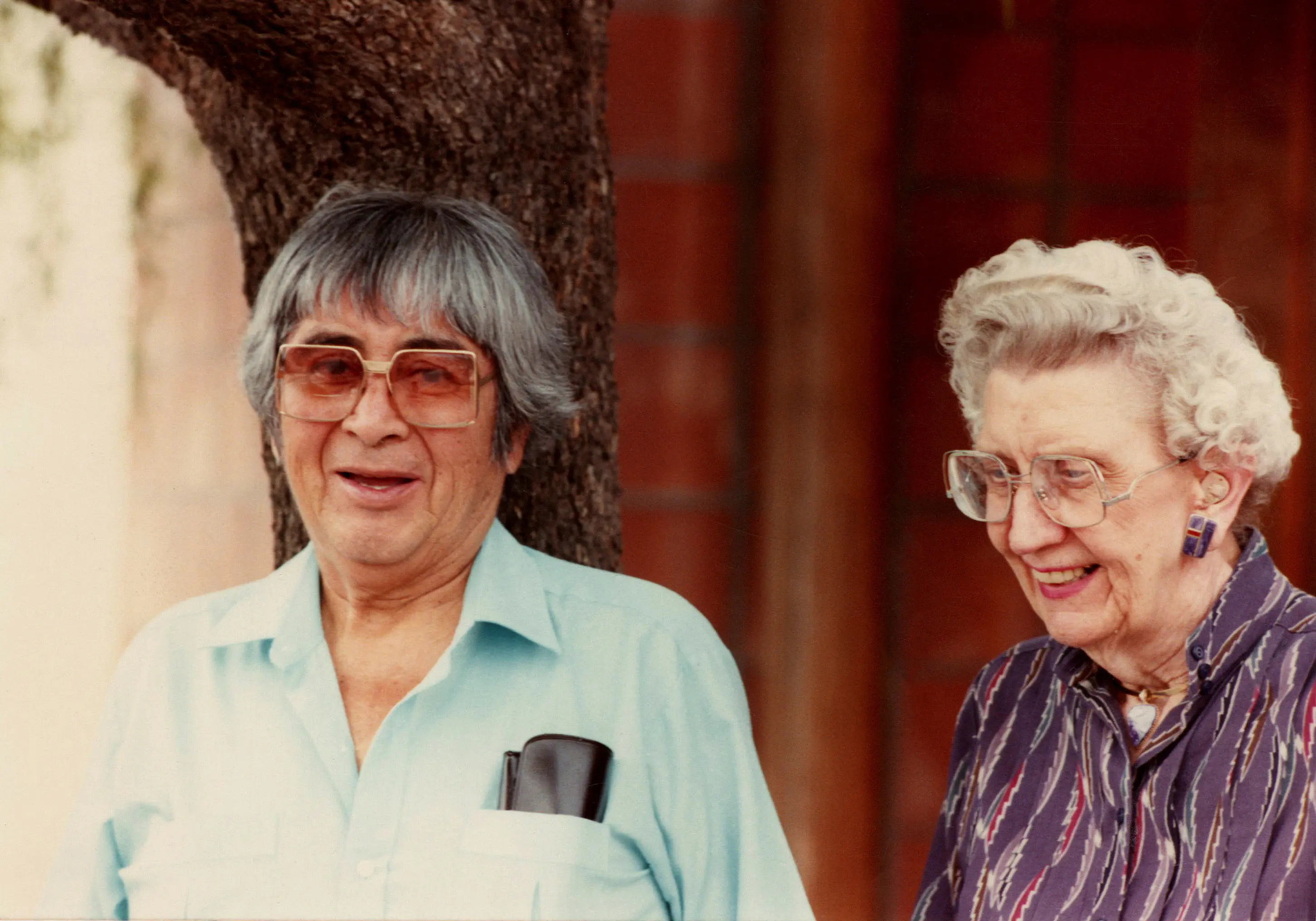
Lovena and Charles Loloma, 1987
Charles Loloma was born in Hotevilla on Third Mesa of the Hopi Reservation on January 7, 1921. From 1941 to 1945 he served in the army, spending more than three years in the Aleutians, and in 1942 he married Otellie Pasivaya. After his discharge the couple settled in Shipaulovi on the Second Mesa, and in late 1945 the GI Bill allowed him to study ceramics at the School for American Craftsmen at Alfred University in New York. There he received a fellowship from the Whitney Foundation for ceramics research on the Hopi Reservation, work he pursued from 1949 to 1951.
In 1954 Loloma and his wife opened a pottery shop in Scottsdale, becoming the first tenants of the Kiva Craft Center founded by Lloyd Kiva New. In 1955 he began turning his creative energy toward jewelry, and gradually this new art form took precedence over his celebrated Lolomaware pottery. He taught at the University of Arizona, Arizona State University, and their summer extension courses in Sedona, and in 1959 took part in the founding conference of the Rockefeller Foundation's Southwest Indian Art Project, serving as an instructor through its three following summer sessions.
"In order to create valid art, you have to be true to yourself and your heritage."
— Charles Loloma
In 1962, with the founding of the Institute of American Indian Arts in Santa Fe, Loloma realized a long-held dream shared with Lloyd New: a school directed toward helping Native students find individual expression of their cultures through the arts. The two were appointed heads of the Department of Plastic Arts and the Sales Department. Loloma's jewelry became internationally known, entering the collections of many distinguished figures, including Mrs. Dwight D. Eisenhower and Mrs. Frank Lloyd Wright; in the 1960s President Lyndon B. Johnson commissioned pieces presented to the Queen of Denmark and to the wife of the Philippine president. He won First Prize for seven consecutive years at the Scottsdale National Indian Arts Exhibition.
Throughout his life Loloma maintained a deep reverence for Hopi beliefs and ceremonies, living by the Hopi calendar and its cycles of birth, death, and regeneration. He felt a profound kinship to stones—not only the precious and semi-precious ones in his jewelry, but the humble stones he gathered on the hills or along the beach. He sought not to conquer the stone but to help it express itself. Charles Loloma passed away in 1991, leaving behind a legacy that continues to inspire and captivate.
A Personal Remembrance
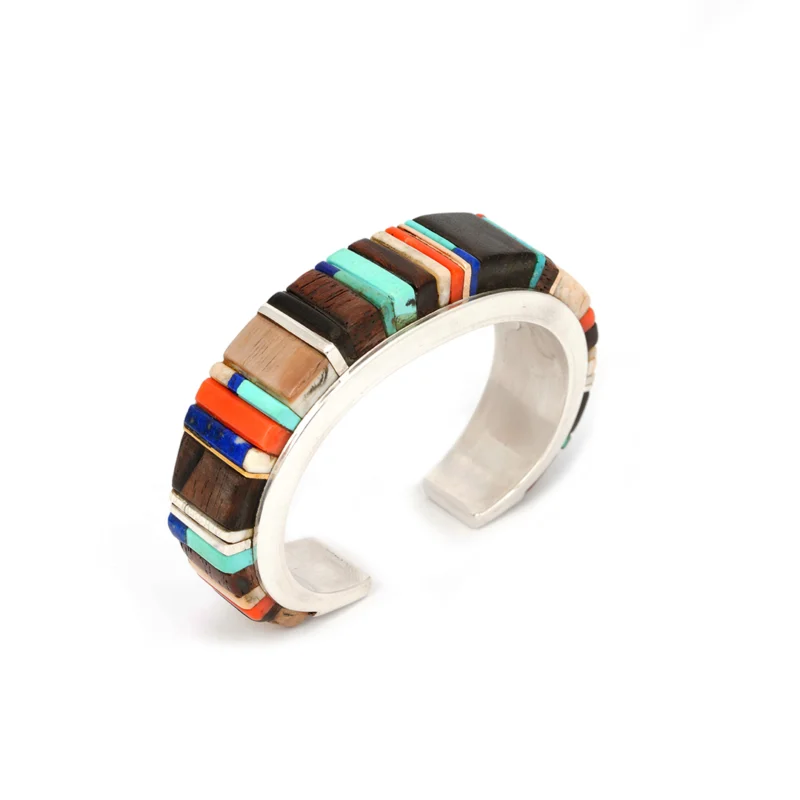
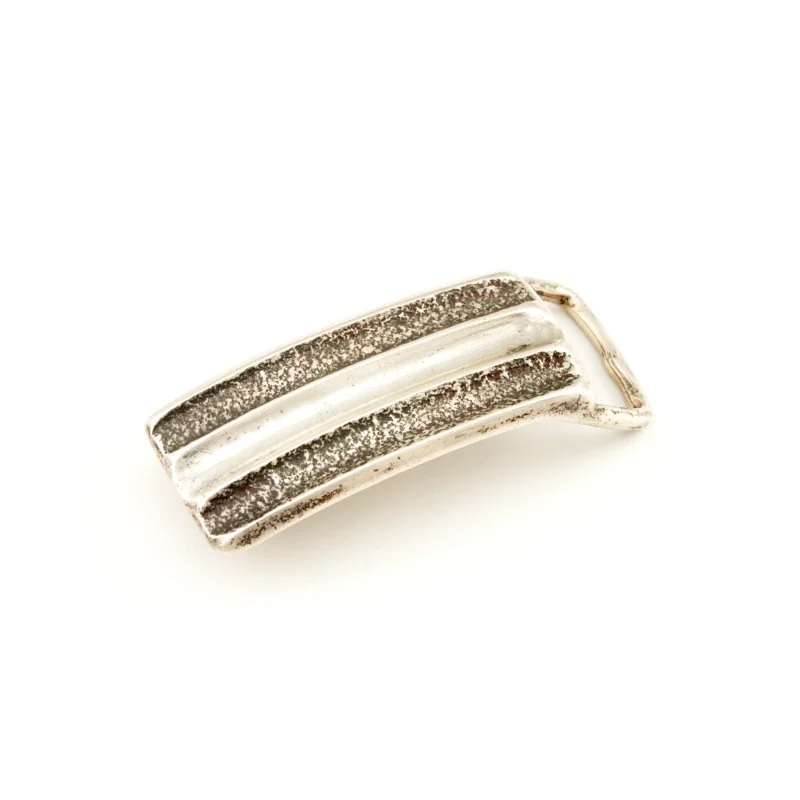
I remember the time before I met Charles Loloma. Lovena would often visit our family in Chicago wearing his stunning jewelry, and I was always captivated by their beauty. In 1981, at twenty-one years old, I moved to Arizona to work at Lovena's Gallery in Scottsdale. On my first day, Charles and Georgia Loloma came to see Lovena to discuss new pieces. Lovena never accepted gifts from Charles, so he turned to me and said, "Bill, I can never get Lovena to take a gift, but she can't stop me from giving you anything." That's when he presented me with a sterling silver Kachina Mask belt buckle with ironwood and Lone Mountain Turquoise inlay. This belt buckle is currently on display at the Western Spirit: Scottsdale Museum of the West for everyone to see.
Charles Loloma at his studio
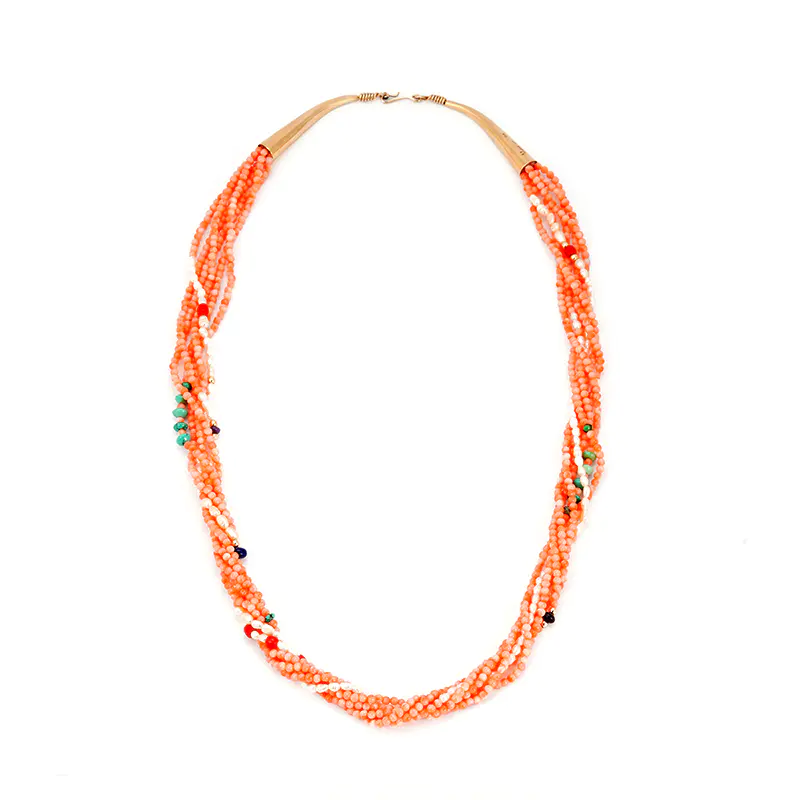
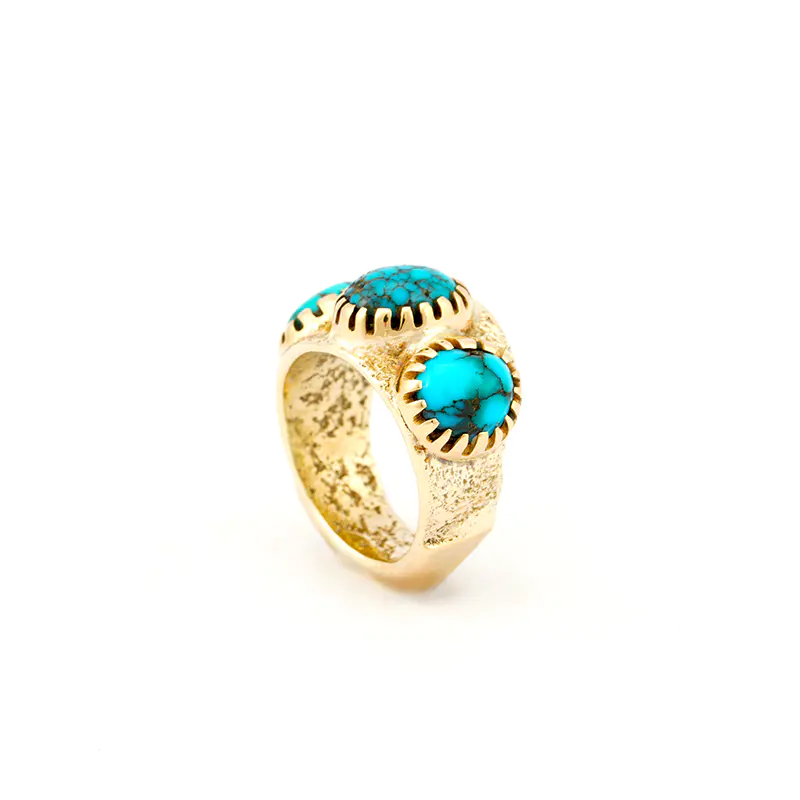
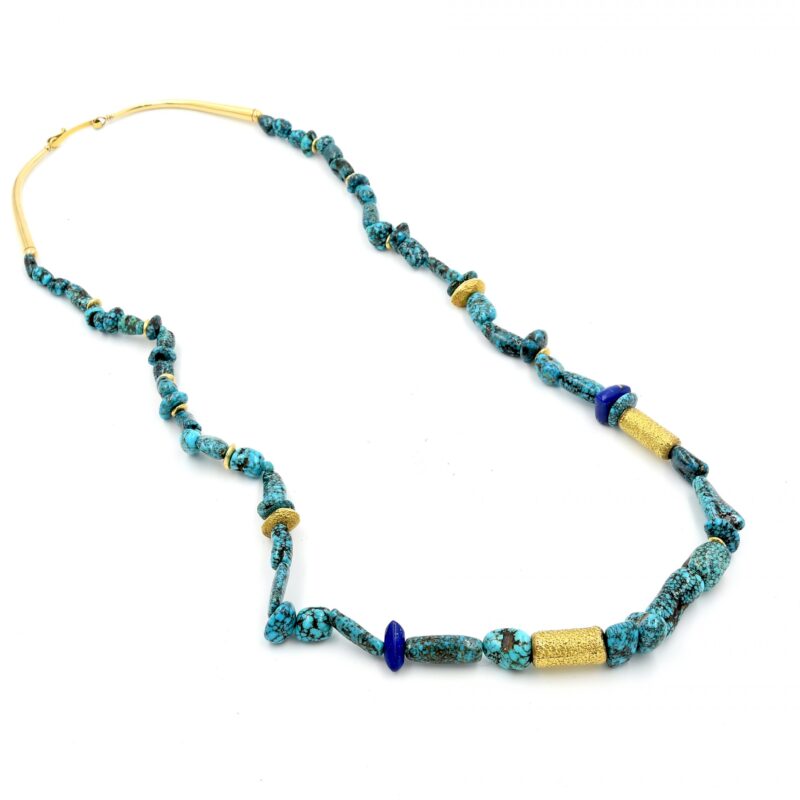
In 1982 I had my first show with Charles. He was an amazing teacher and salesman—he had attended the Dale Carnegie Schools of Salesmanship, and I'll never forget the time a woman admired a ring in the case, tried it on, and found it a perfect fit. Charles said, "Well, now I made that special just for you," and she bought it. I visited Hopi at Charles's studio and learned a great deal about how he created his jewelry. Many people think his bracelets were all made through lost-wax casting, but that wasn't the case; he either hand-fabricated or tufa-cast them. Whenever Charles met people in the gallery, he had a talent for sketching jewelry pieces on paper to show how they would look before creating them—a wonderful visual aid.
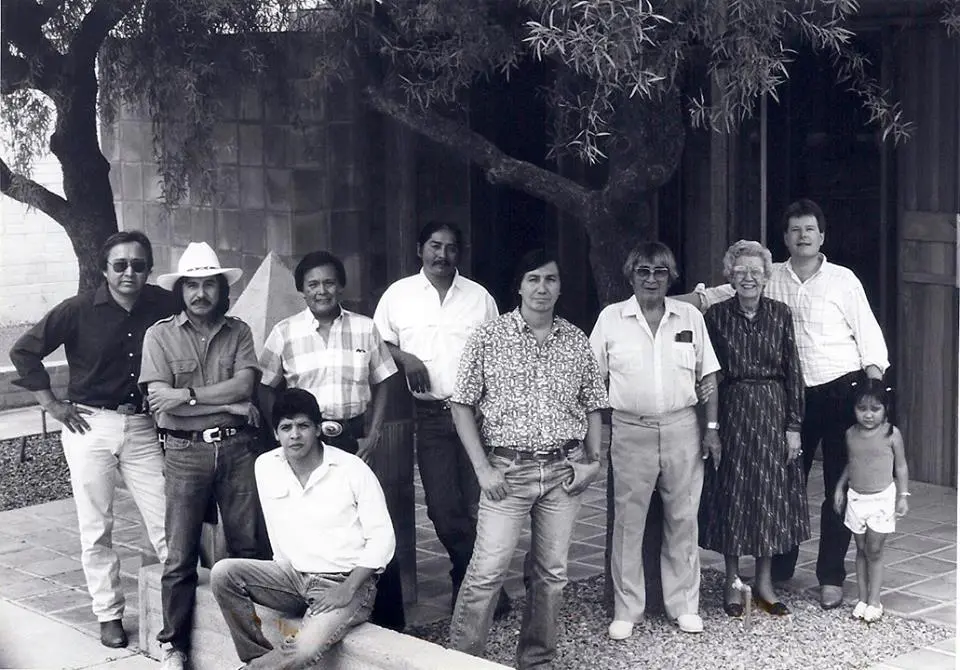
Charles's gift was recognized far beyond our gallery. As a young man he assisted the muralist Fred Kabotie on works shown at the Museum of Modern Art in New York, and by the 1960s he was widely regarded as the foremost Native American jeweler of his time. He set hidden stones on the inner surfaces of his pieces, explaining that "people have inner gems"—a belief that ran through everything he made. In 2005, the Wheelwright Museum in Santa Fe honored him with a 466-object retrospective titled Loloma: Beauty Is His Name. The title was fitting: "Loloma" means "beauty" in the Hopi language, and when asked what he hoped to be remembered for, Charles simply said, "beauty."
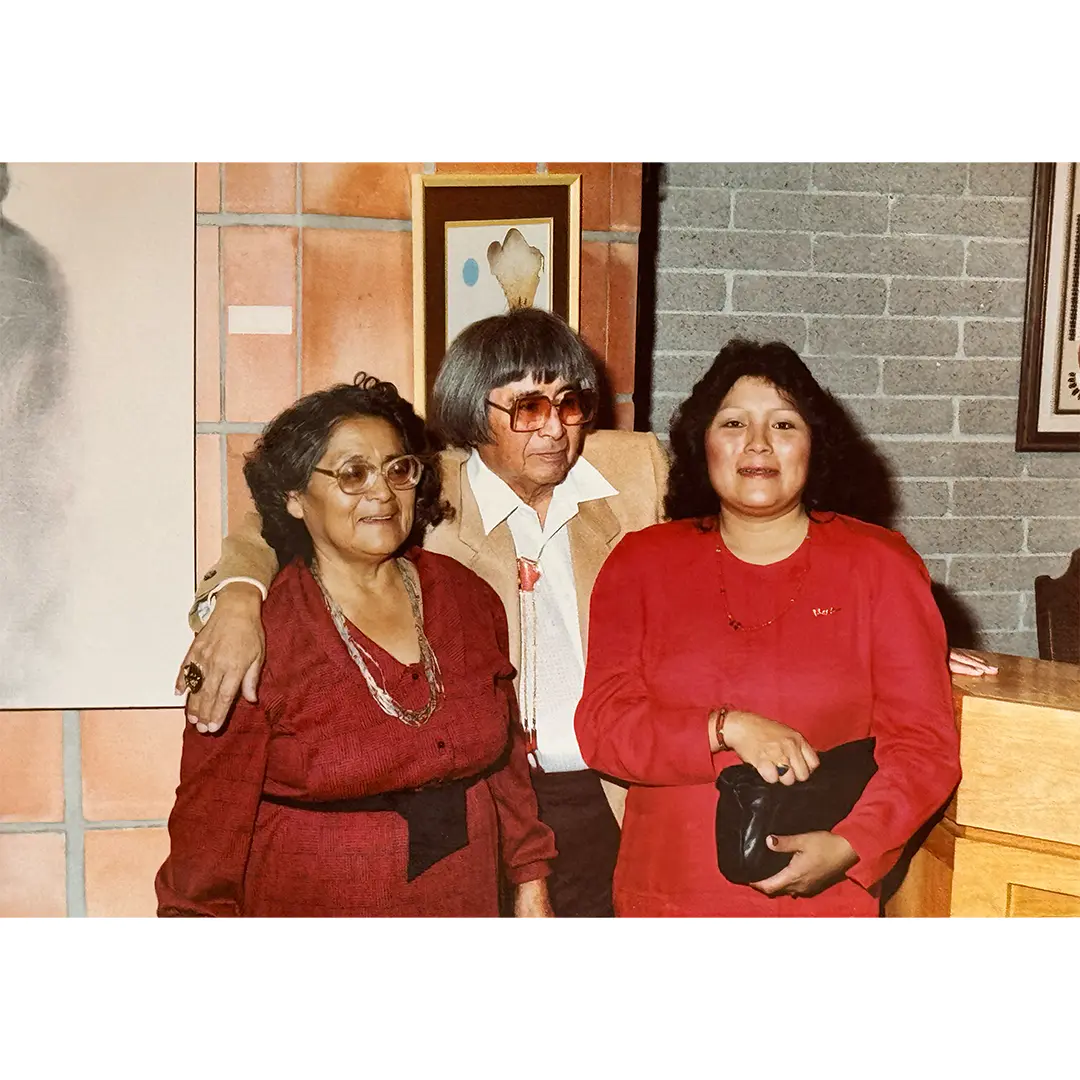
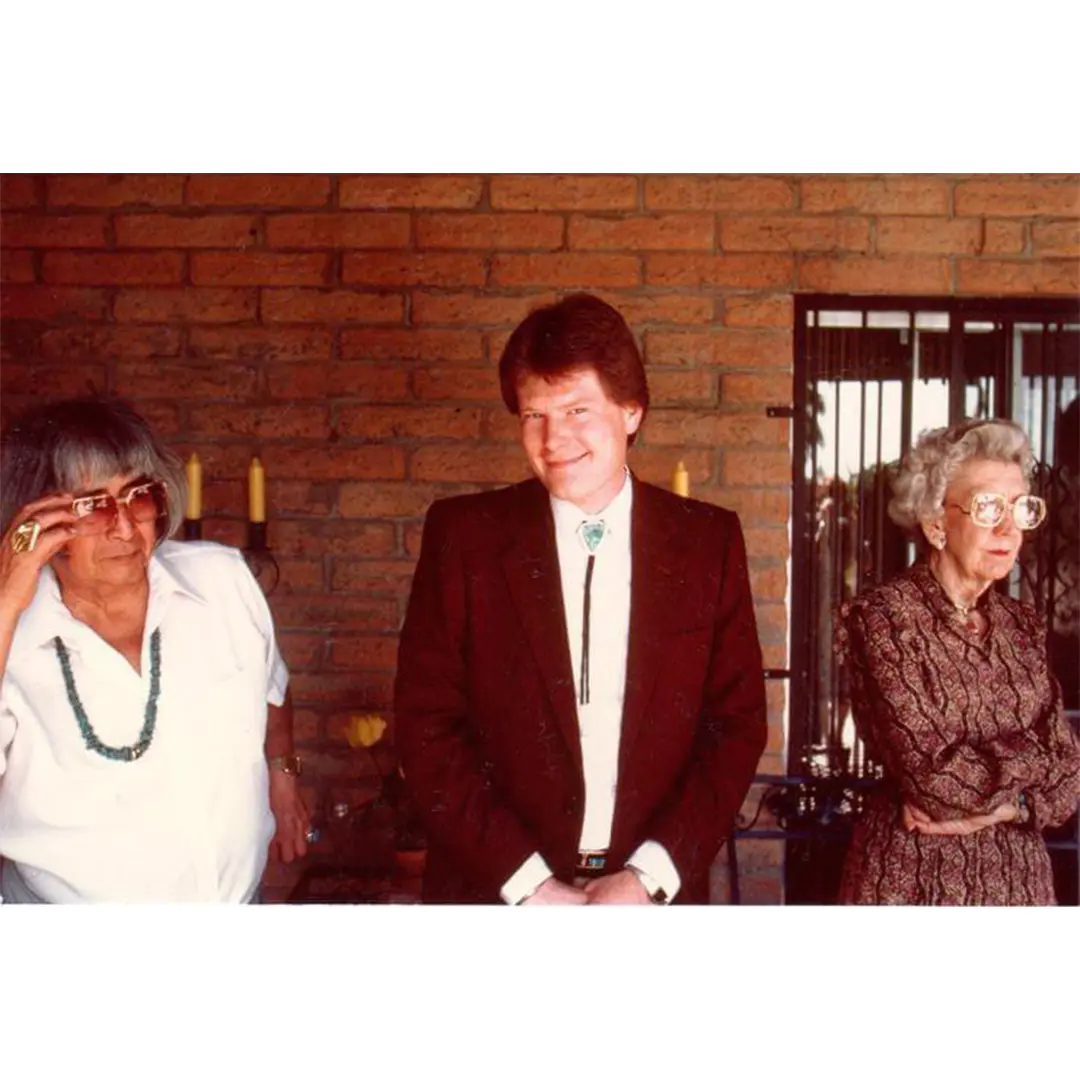
Charles Loloma, Lovena, and Bill Faust
I worked with Charles and we were friends for over ten years until he passed away in 1991. I adored Charles; he was so good to Lovena and me. He shared beautiful stories about Hopi culture and the significance of each piece he created, and occasionally a wild party story that still makes me laugh today. I still get to experience Charles's artistry through the pieces people bring to the gallery, and through his niece Sonwai, who continues to showcase her jewelry in my galleries today.
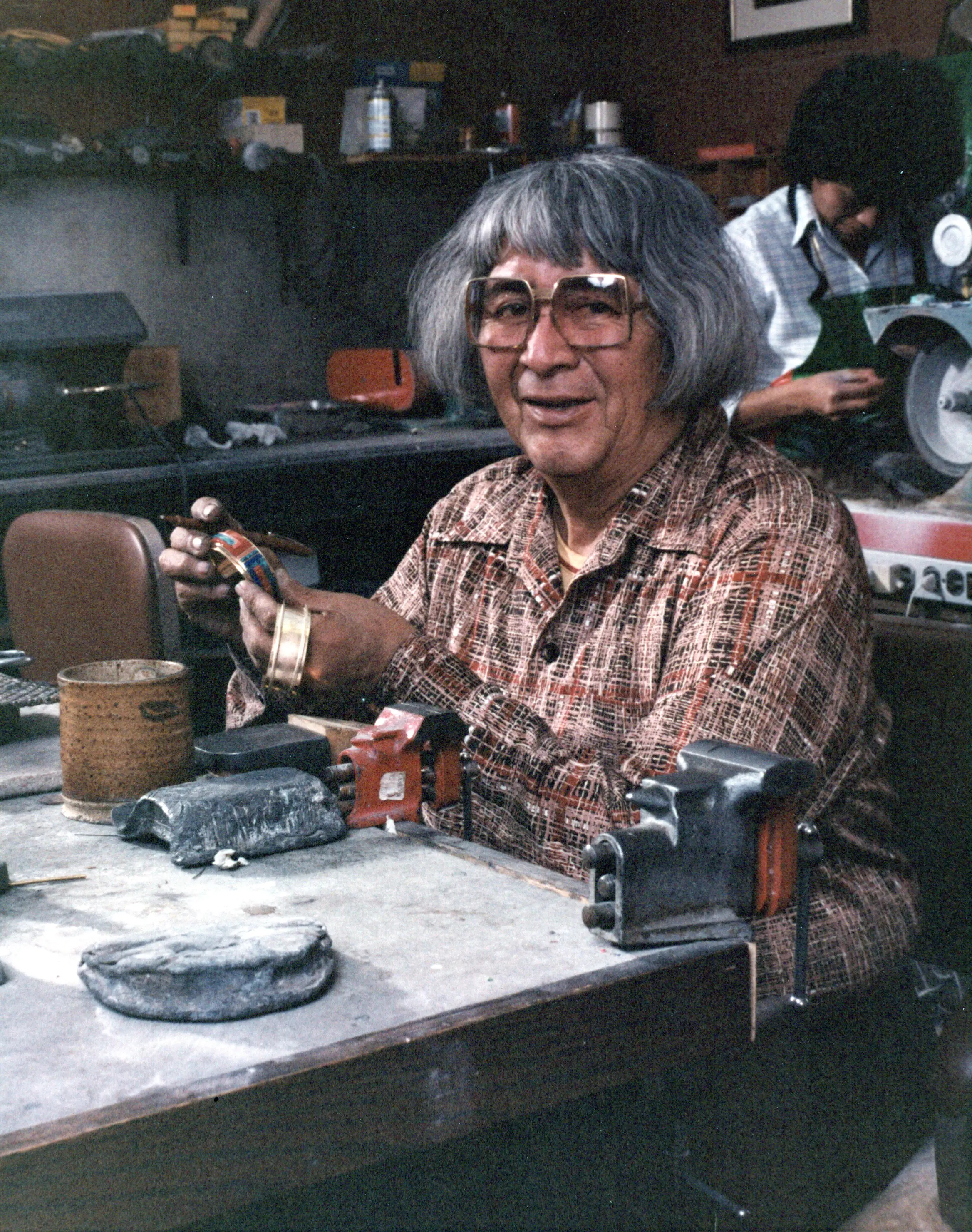
Charles Loloma and Sonwai in studio