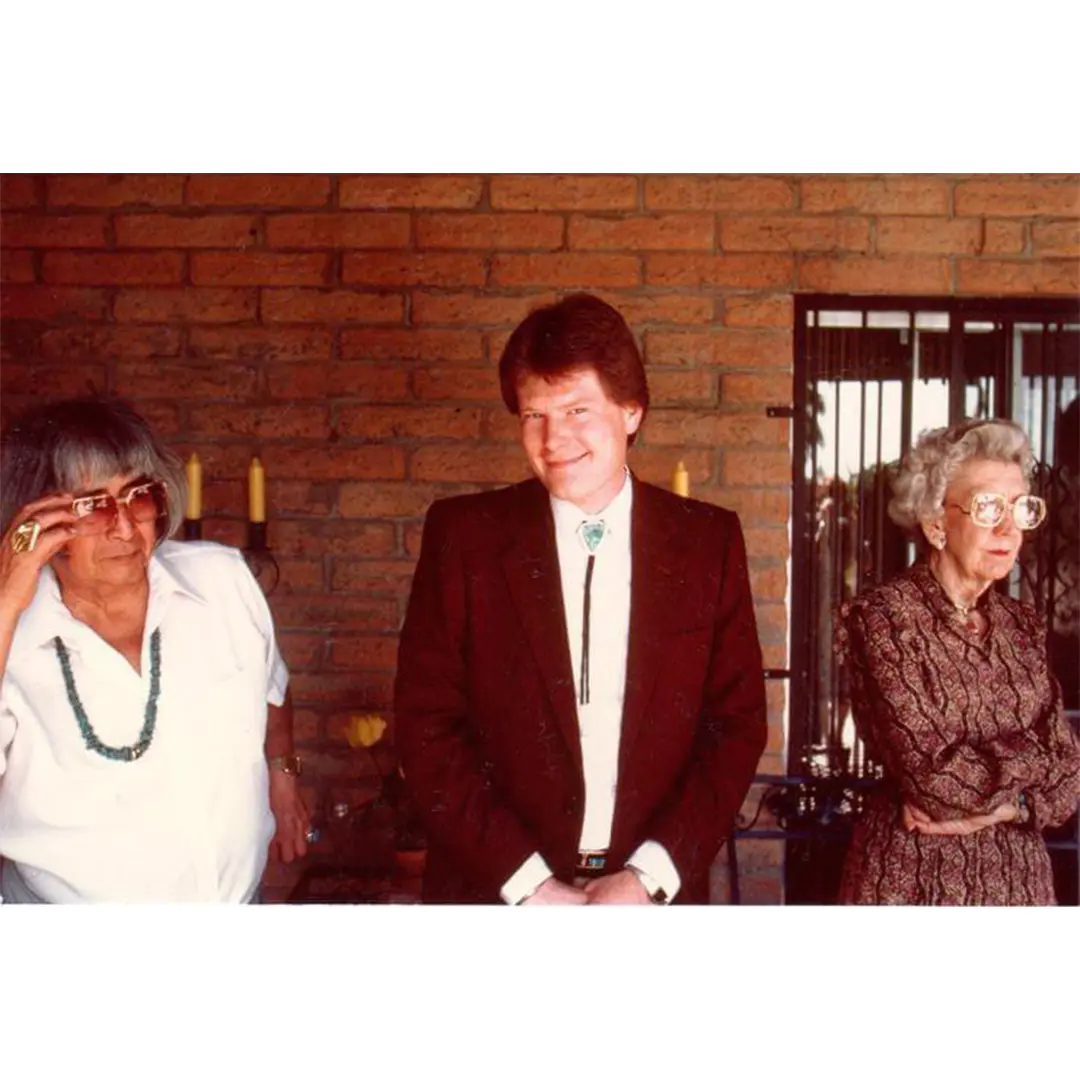
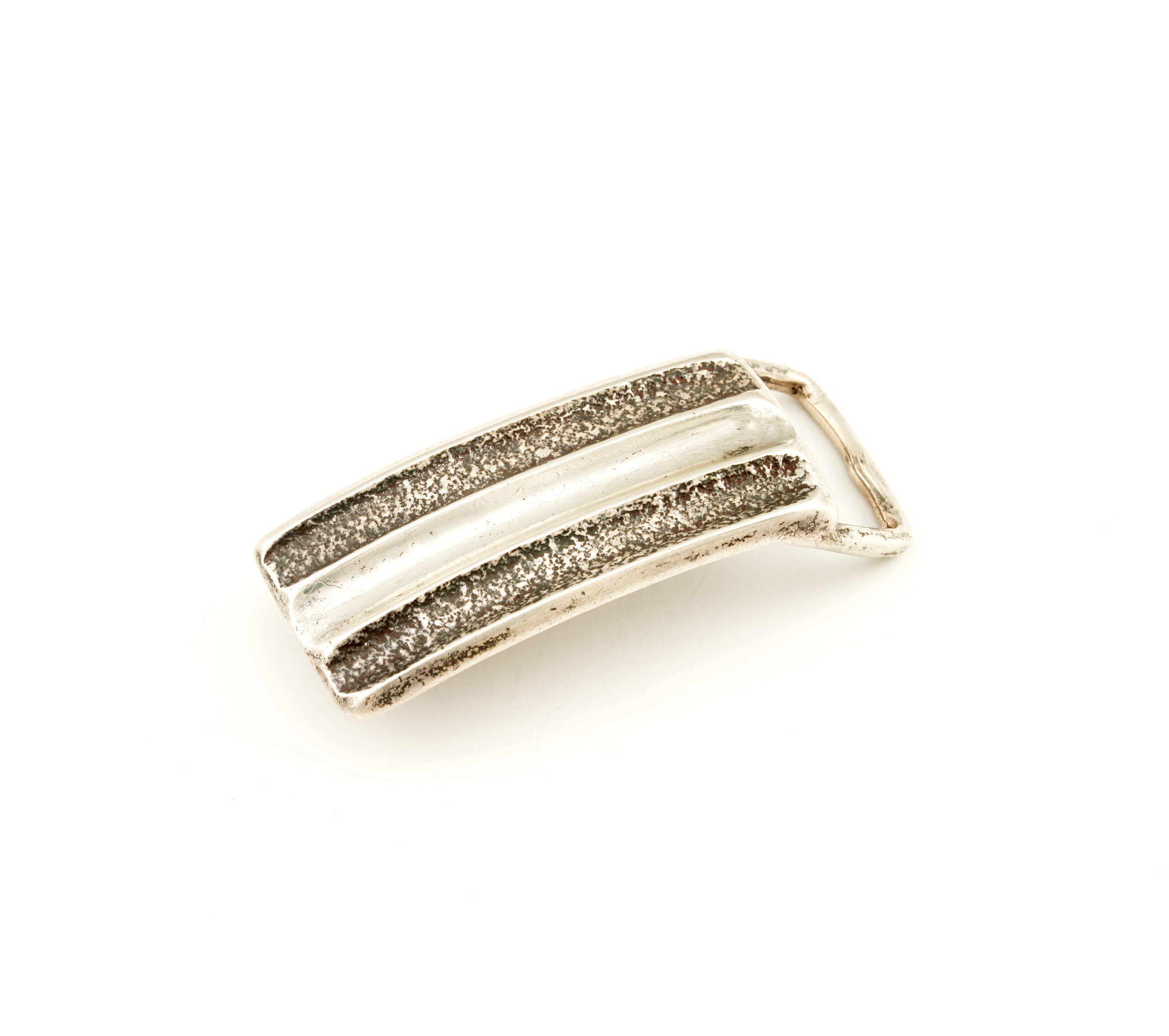
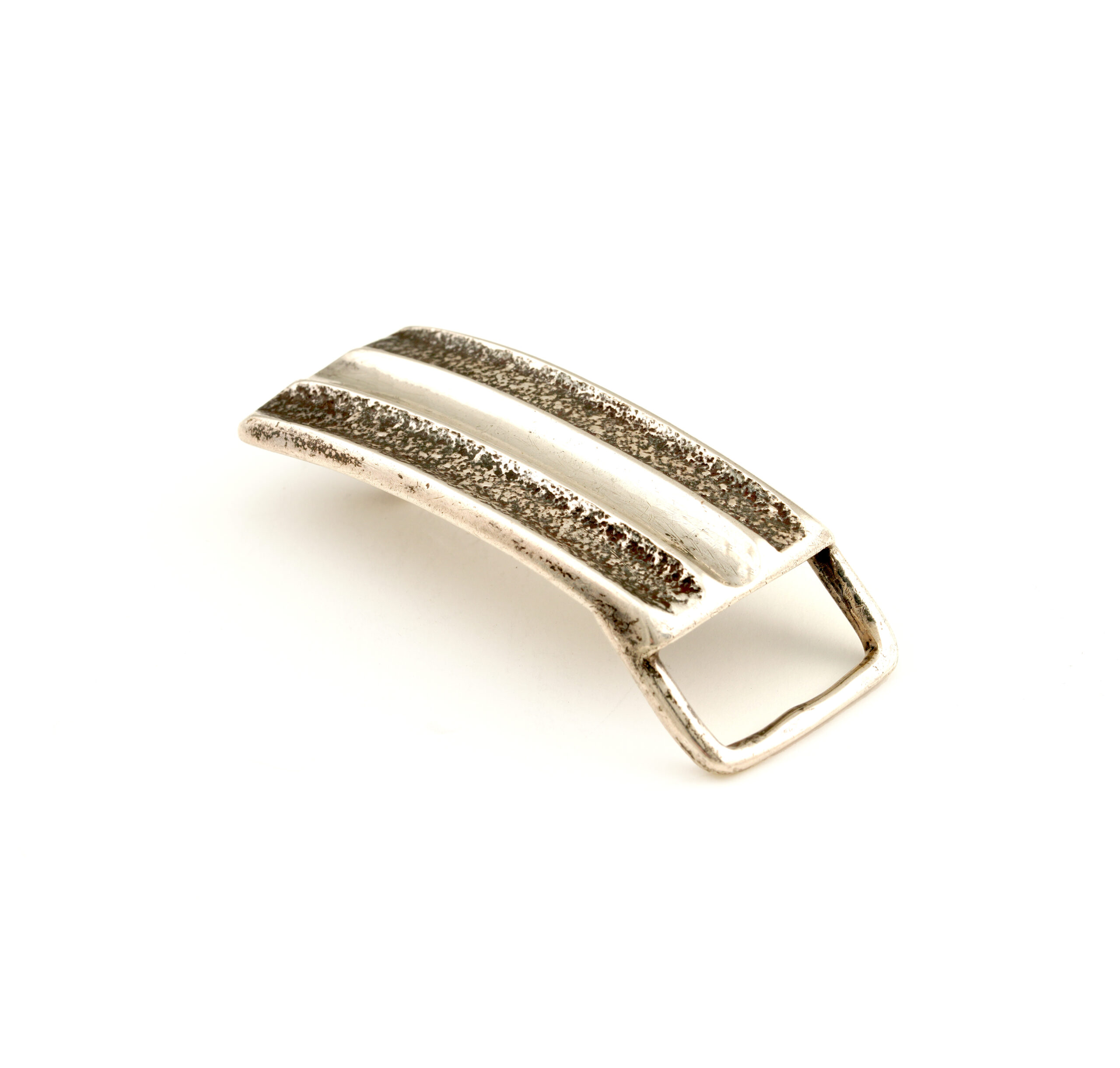
Charles Loloma Silver Belt Buckle

$6,800.00

Charles Loloma classic sterling silver tufa cast dress belt buckle.

Dimensions

2″ 13/16th L X 1″ W

Belt: 13/16 W

*Price On Request

In Stock


Charles Loloma

b. 1921, Hotevilla, Arizona  ·  d. 1991  ·  Hopi

Hopi master jeweler Charles Loloma at his studio bench

Charles Loloma, William Faust II, Lovena Ohl.

Widely regarded as the foremost Native American jeweler of the twentieth century, Charles Loloma transformed Hopi jewelry by introducing gold, diamonds, and unconventional stones, and by setting hidden "inner gems" within his pieces. A member of the Badger Clan and a Hopi spiritual leader, he drew on a deep reverence for his heritage to create work that entered collections around the world—from Mrs. Dwight D. Eisenhower to the Queen of Denmark.

"In order to create valid art, you have to be true to yourself and your heritage."

— Charles Loloma

In 2005, the Wheelwright Museum in Santa Fe honored Loloma with a 466-object retrospective titled Loloma: Beauty Is His Name—a fitting title, since "Loloma" means "beauty" in the Hopi language. Asked what he hoped to be remembered for, he simply said: "beauty."
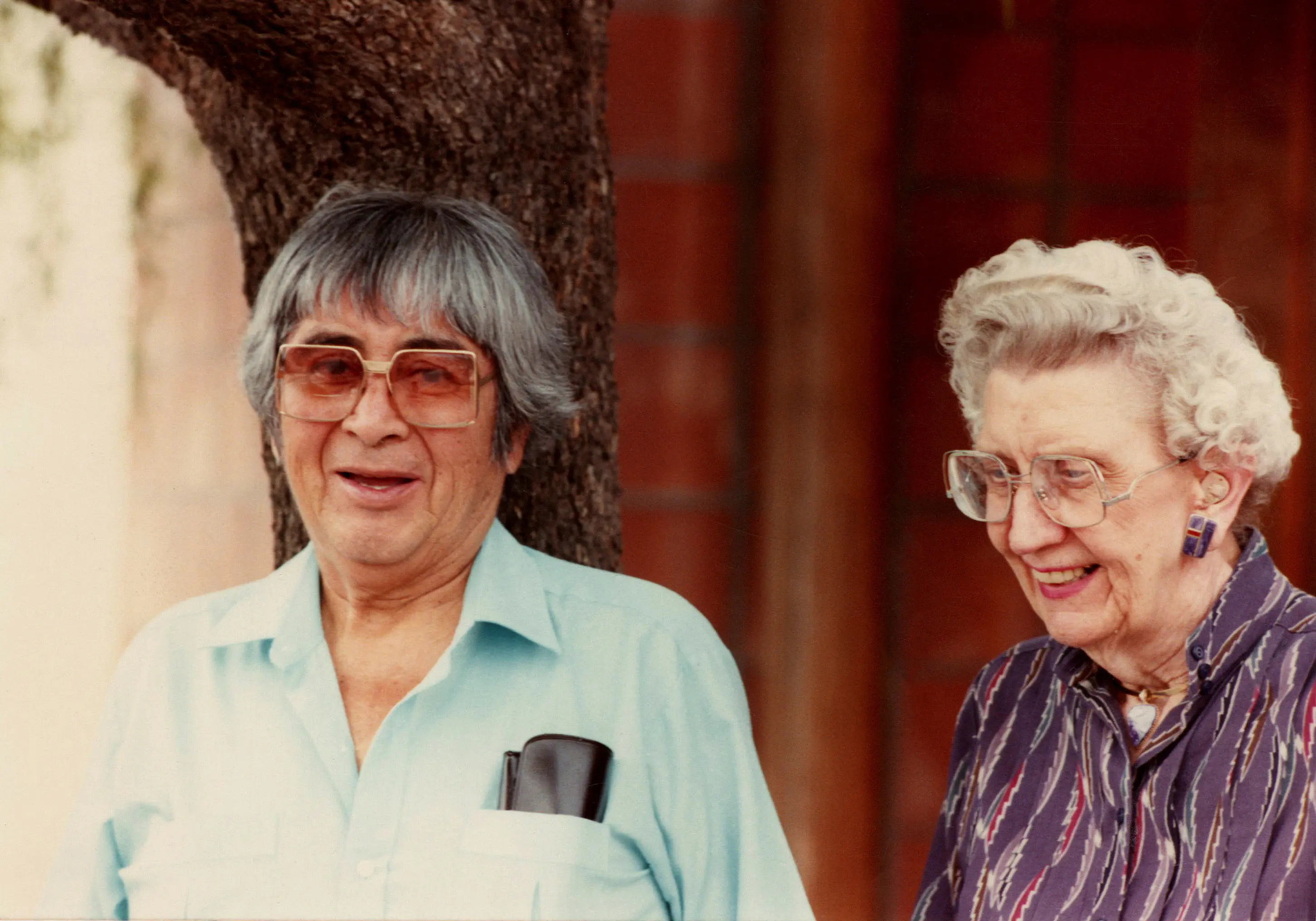
Hopi jeweler Charles Loloma with gallery owner Lovena Ohl, 1987

Lovena and Charles Loloma, 1987

Tufa casting is an ancient and revered metalworking technique used predominantly by Navajo and other Southwestern Native American jewelers. The process involves carving a design into a soft, porous volcanic stone known as tufa, which is composed of compressed volcanic ash. Tufa stone is ideal for casting due to its ease of carving and ability to withstand high temperatures.

To begin, the artist cuts and sands two matching tufa stones, creating a mold by hand-carving the desired design into one half. A funnel-like channel is also carved to allow molten metal—usually sterling silver or gold—to be poured into the mold. The two stone halves are then bound together and pre-heated to remove moisture, which prevents cracking during casting. Once the molten metal is poured in and cooled, the mold is broken open, revealing a one-of-a-kind piece.

Tufa casting is prized for its texture—the stone imparts a natural, grainy surface to the metal, giving the finished jewelry a distinct organic look and feel. Many artists embrace this texture as a signature element of their work, often finishing the piece with additional hand stamping, polishing, or stone inlay.

This method allows for artistic freedom and individuality, as each mold is used only once, making every tufa cast piece truly unique. Tufa casting reflects a deep respect for tradition and craftsmanship, preserving a hands-on, ancestral approach to jewelry making that continues to inspire contemporary Native artists today.