Faust Gallery
The Navajo Nation
Diné · A Living Legacy of Art and Culture
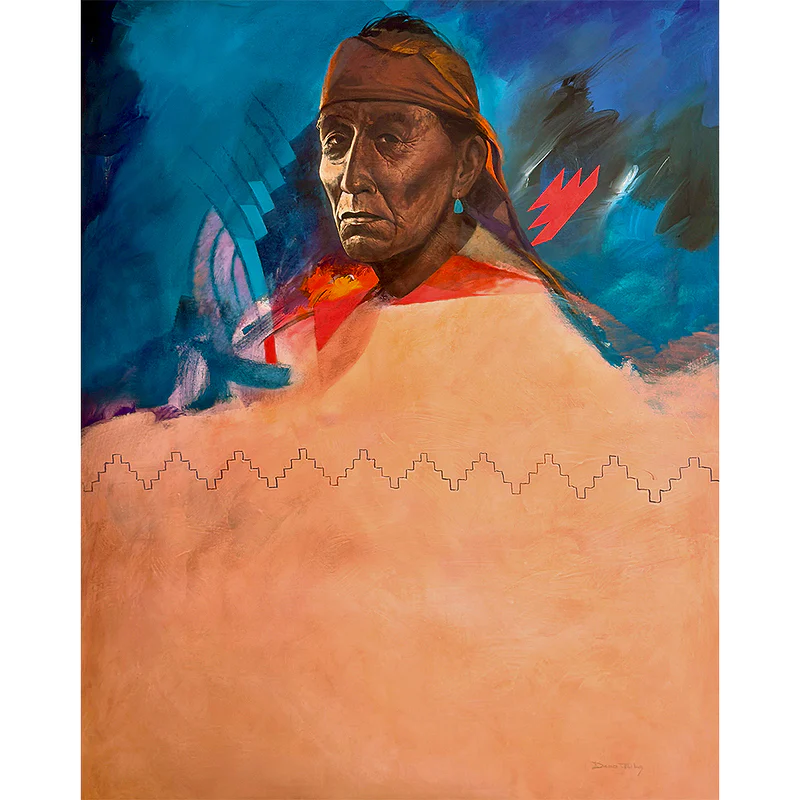
The Navajo people call themselves Diné, meaning “the People.” The Navajo Nation is one of the two largest tribes in the United States by enrollment, and it holds the largest land base of any tribe—more than 27,000 square miles across Arizona, New Mexico, and Utah. Traditional Diné homeland, Dinétah, is bounded by four sacred mountains: Blanca Peak and Hesperus Mountain in Colorado, Mount Taylor in New Mexico, and the San Francisco Peaks in Arizona.
Diné culture is built on a close relationship with the land and the idea of hózhó—balance, harmony, and beauty. That idea runs through Navajo ceremony, daily life, and art.
Ceremony and Oral Tradition
Navajo history and belief are carried through a strong oral tradition. Ceremonies such as the Blessingway (Hózhóójí) restore balance and mark important moments in life. Sandpaintings, or drypaintings, are made by a medicine man for healing ceremonies and are destroyed when the ceremony ends. The sandpaintings sold commercially use altered designs out of respect for the sacred originals.
Hardship and Return
In 1864 the U.S. Army forced thousands of Navajo people on the Long Walk—a march of more than 300 miles to Bosque Redondo at Fort Sumner, New Mexico. Many died on the way and during four years of confinement. The Treaty of 1868 allowed the Diné to return to a portion of their homeland, which has since grown into today’s Navajo Nation.
The Nation governs itself from its capital at Window Rock, Arizona, with its own elected president, council, and courts. In 1968 it founded Navajo Community College, now Diné College—the first tribally controlled college in the United States.
Weaving
Navajo weavers learned the upright loom from their Pueblo neighbors in the 1600s; in Diné tradition, weaving was taught by Spider Woman. Within a century, Navajo blankets were prized trade goods across the Southwest. In the late 1800s, traders encouraged weavers to make rugs for outside buyers, and regional styles developed—Two Grey Hills, Ganado, Teec Nos Pos, and others—each recognized for its own patterns and colors.
Silver and Turquoise
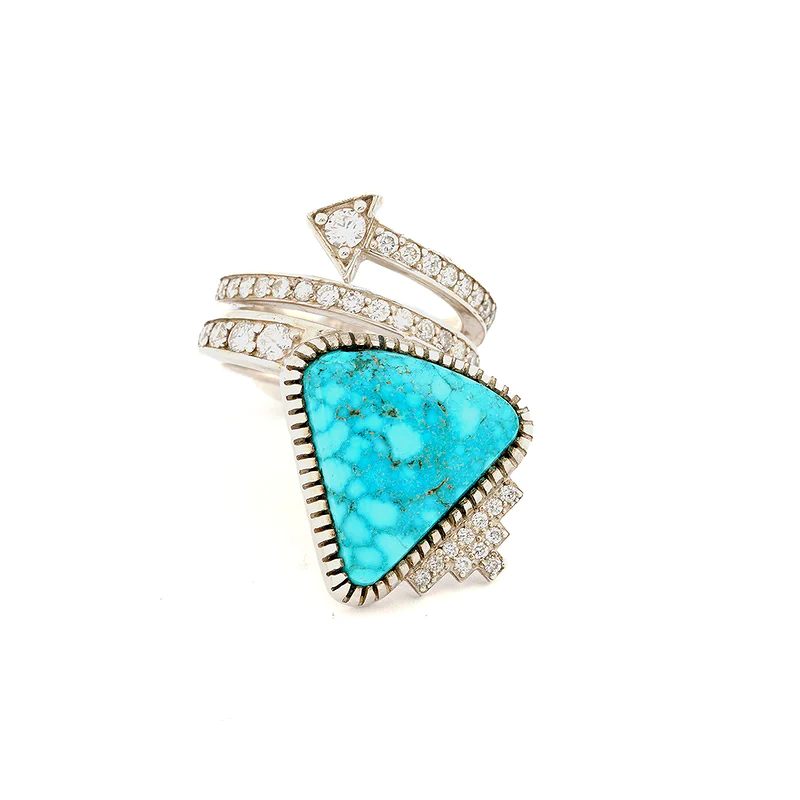
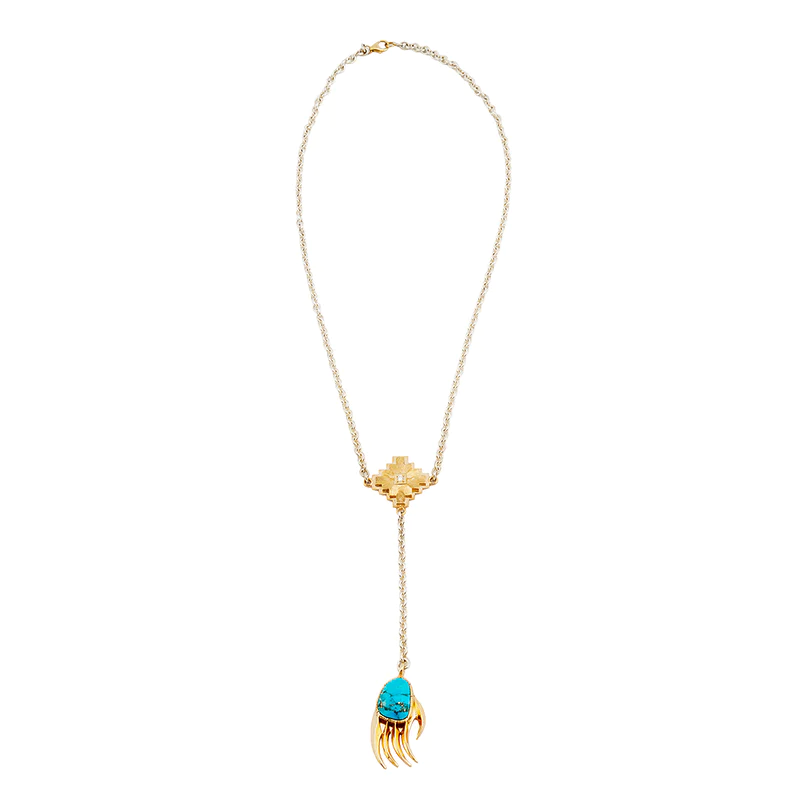
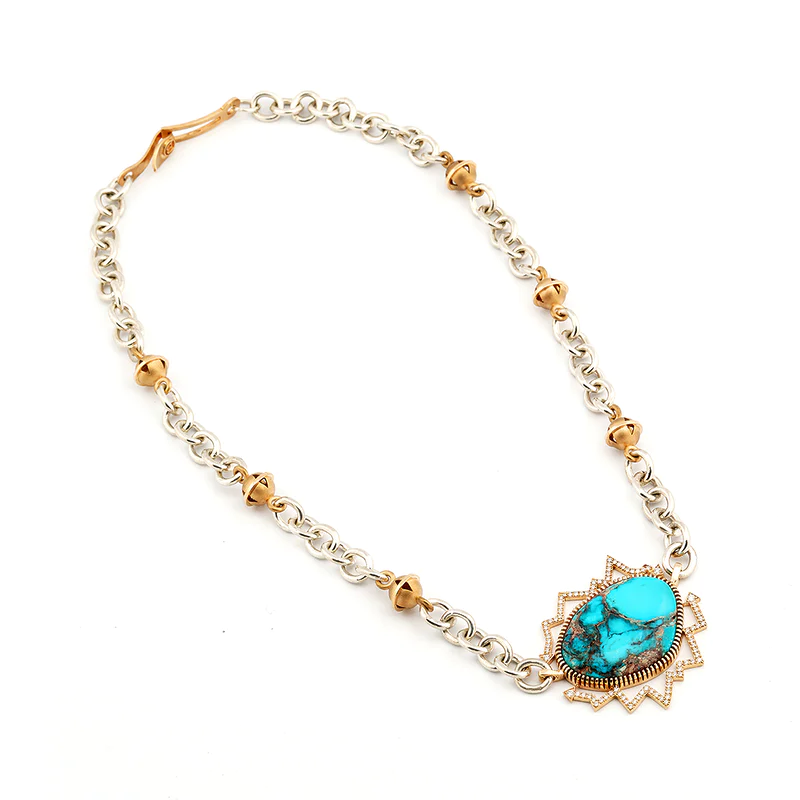
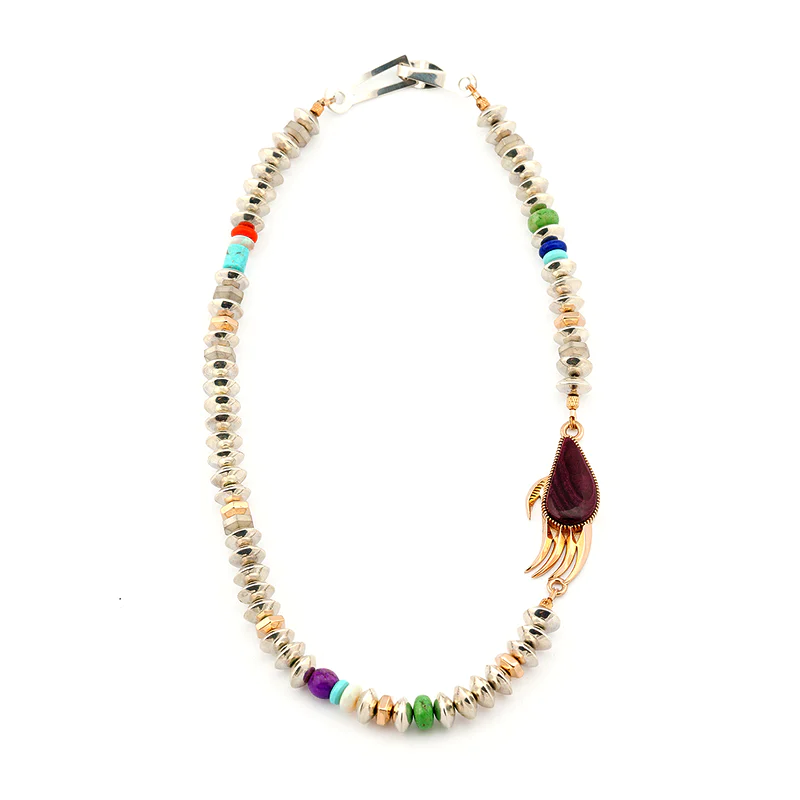
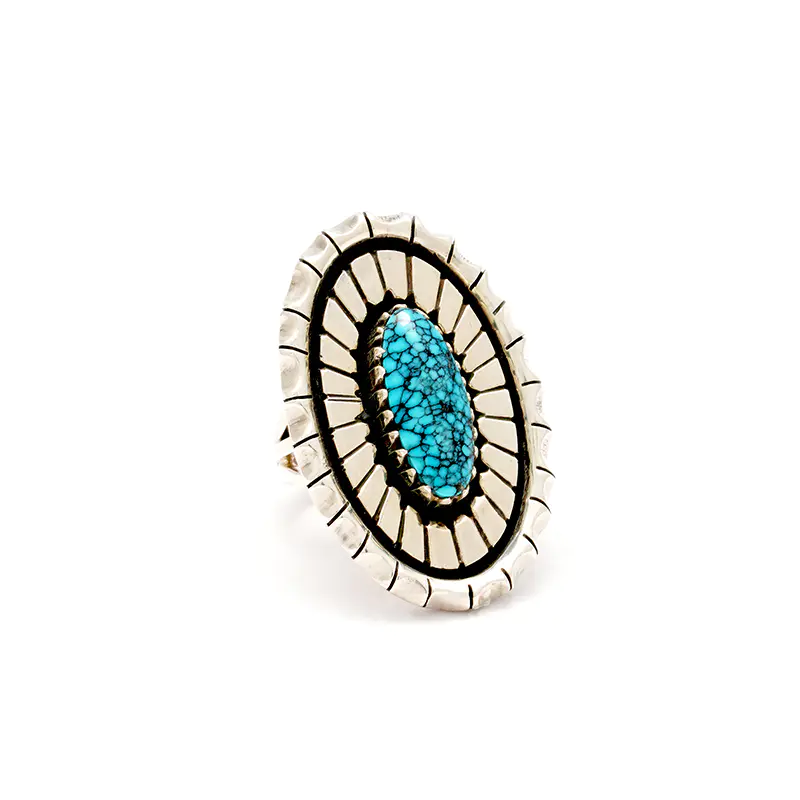
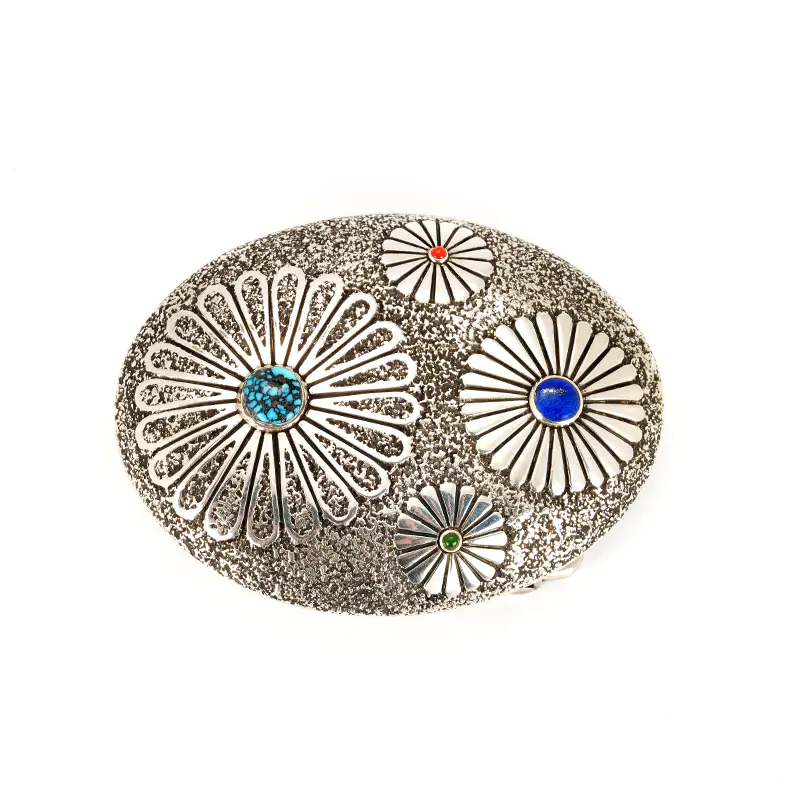
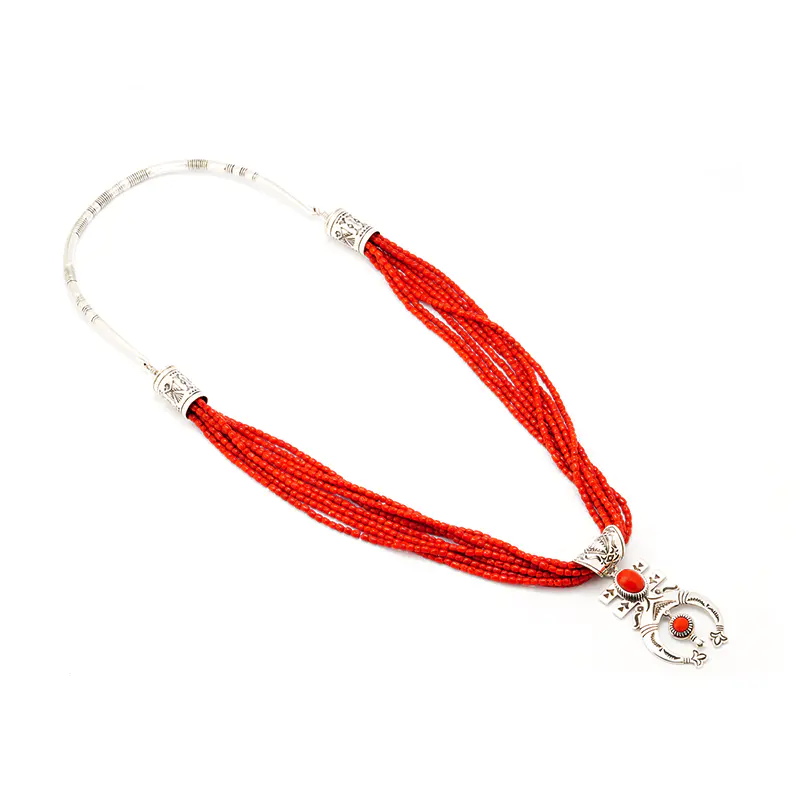
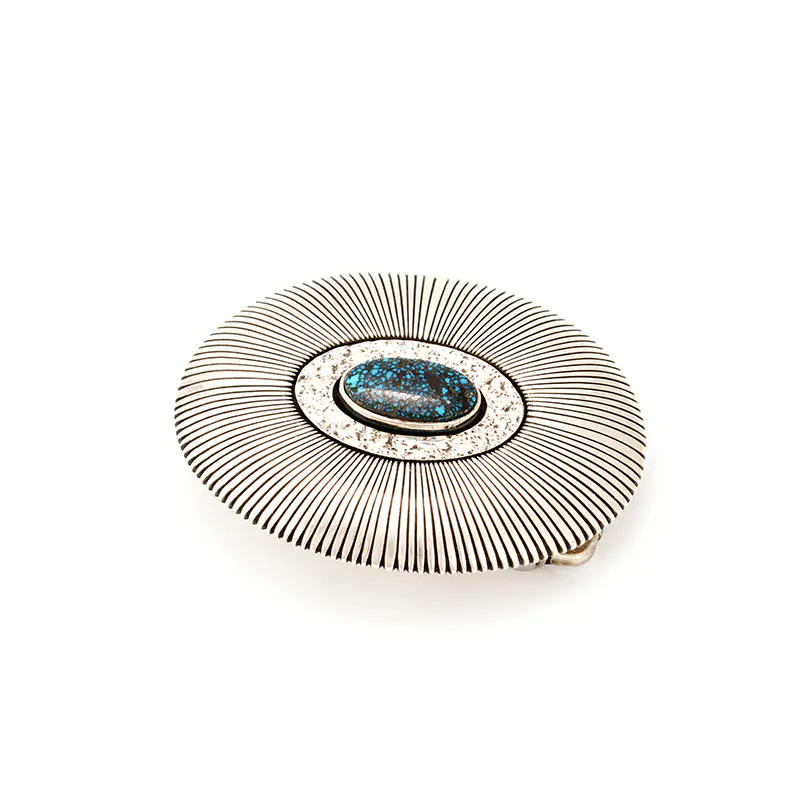
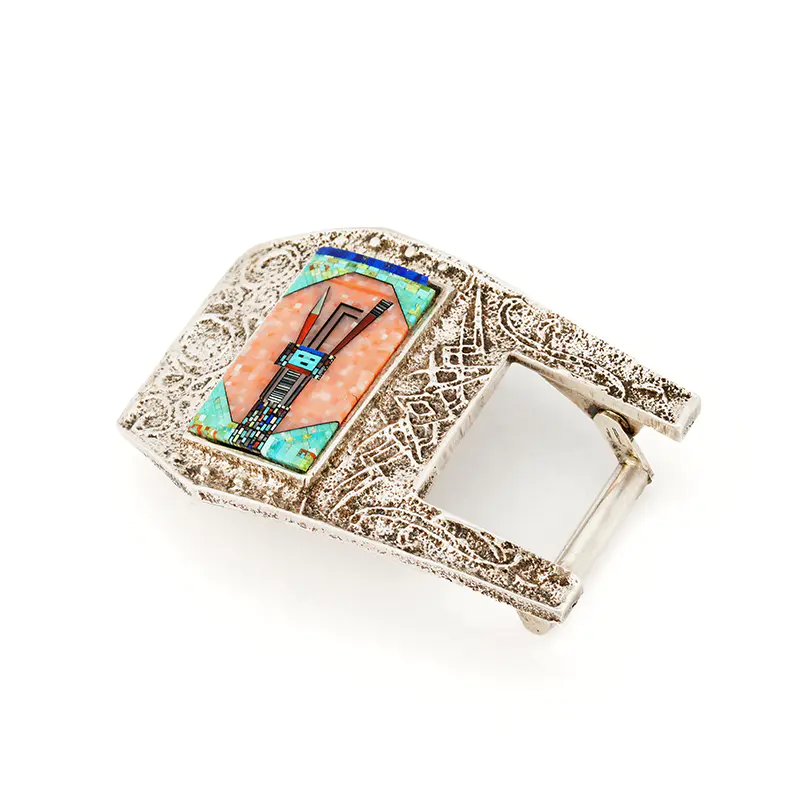
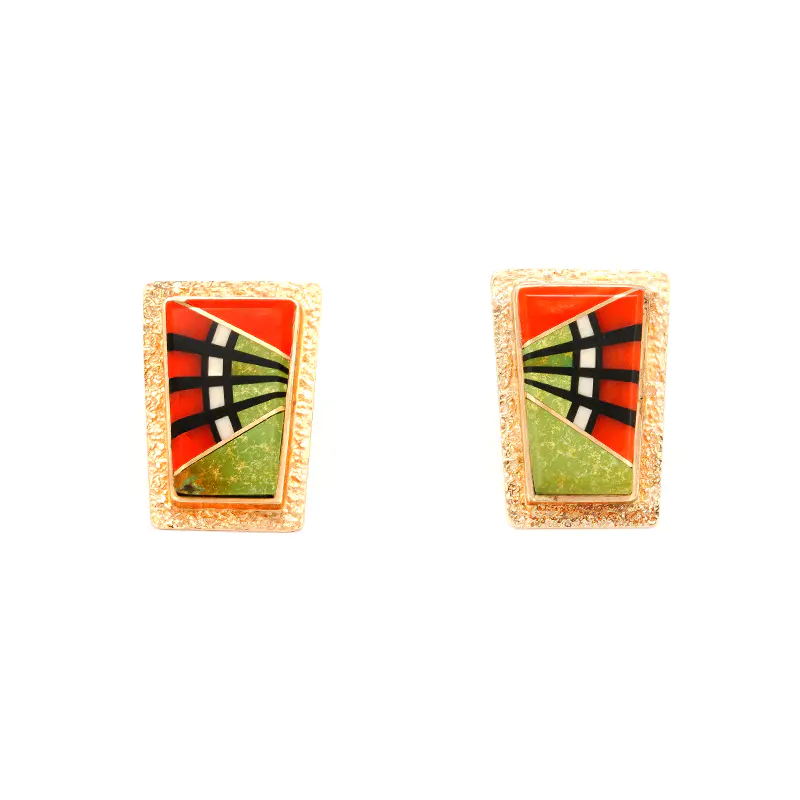
Navajo silversmithing began in the mid-1800s. Atsidi Sani (“Old Smith”), widely credited as the first Navajo silversmith, learned ironworking from a Mexican smith in the 1850s and later began working silver, teaching others, including his sons. By around 1880, Navajo smiths were setting turquoise in silver. Coin silver, stamped designs, the squash blossom necklace, and the concha belt became signatures of Navajo work.
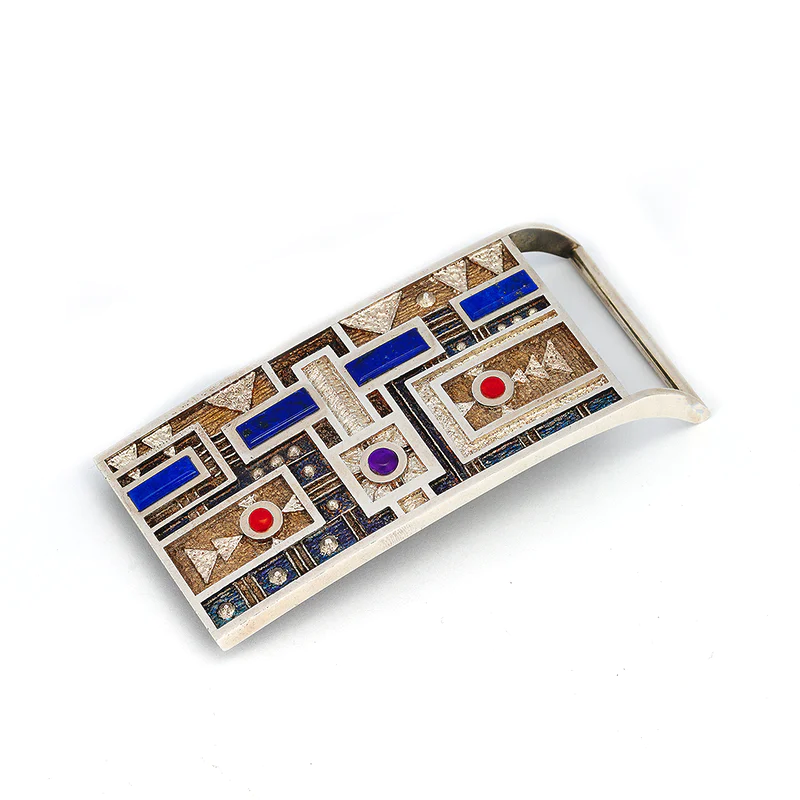
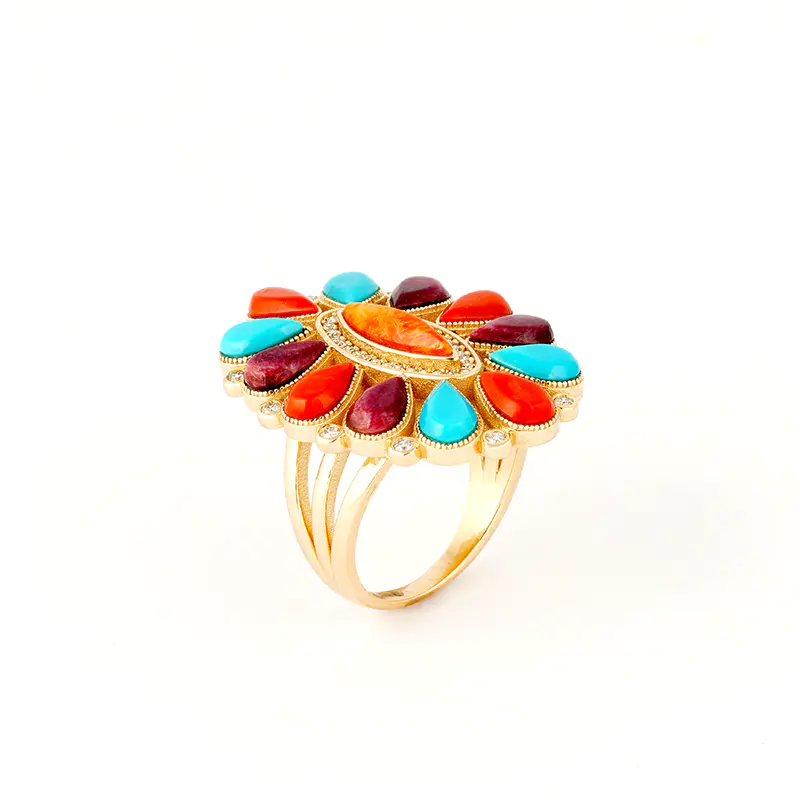
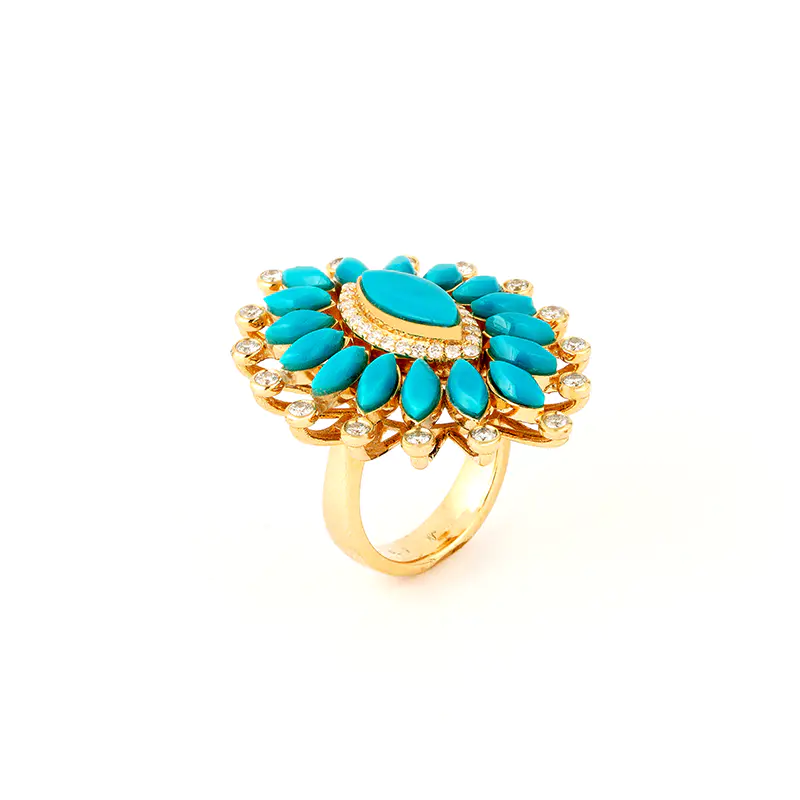
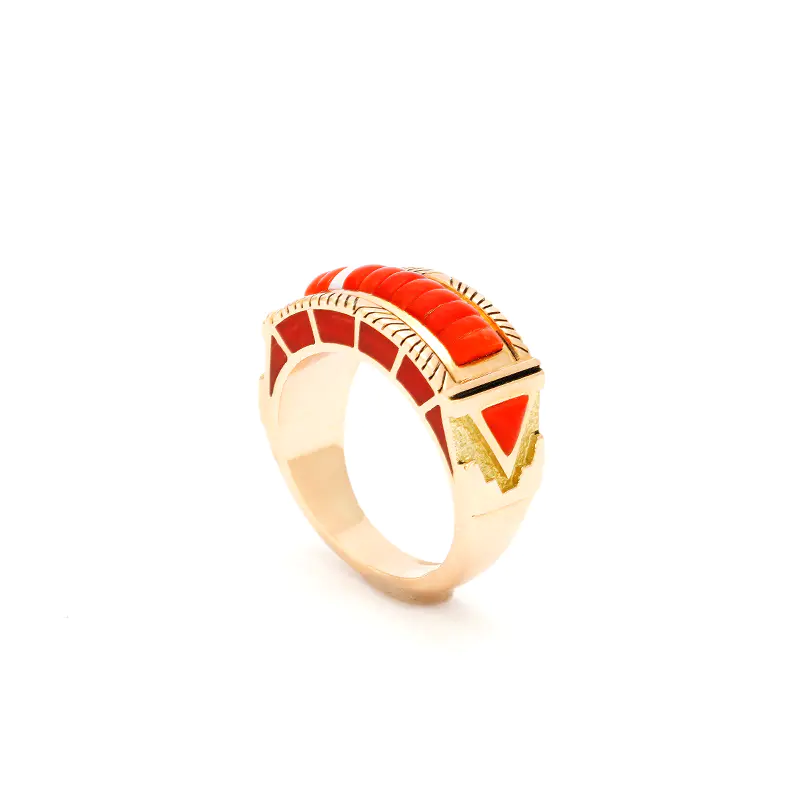
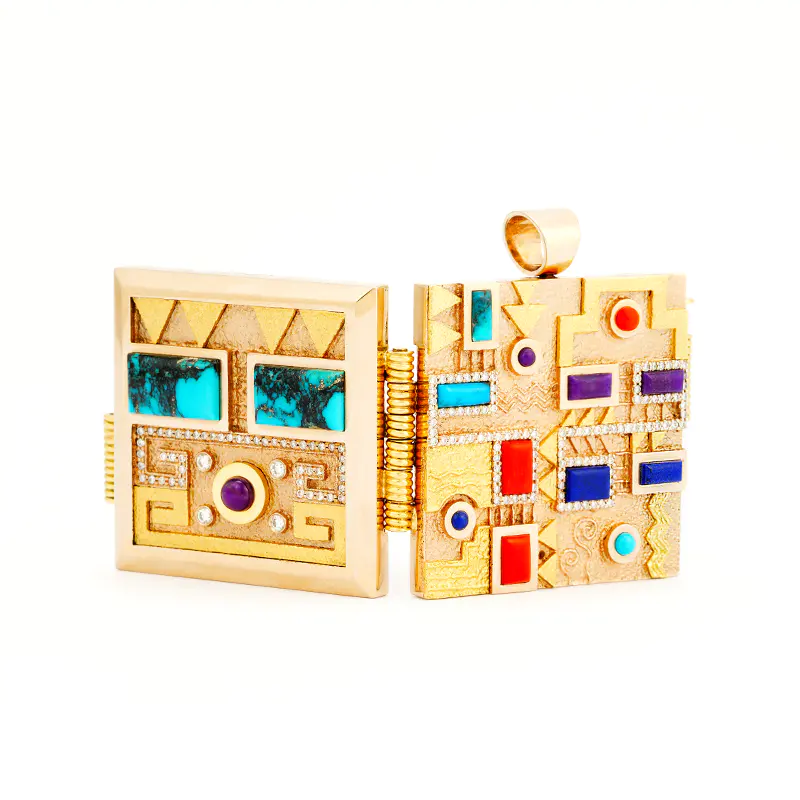
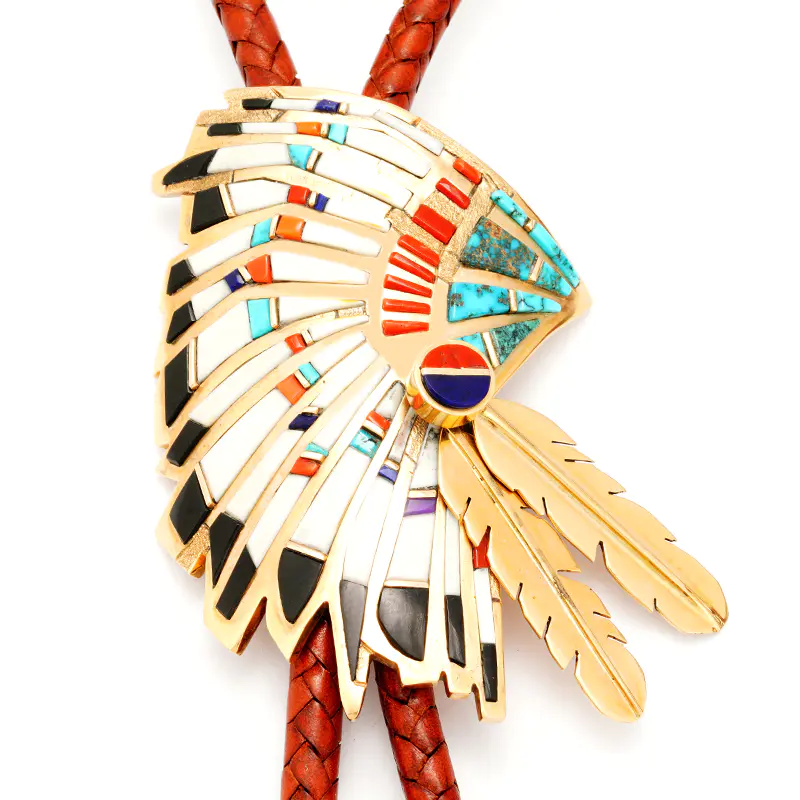
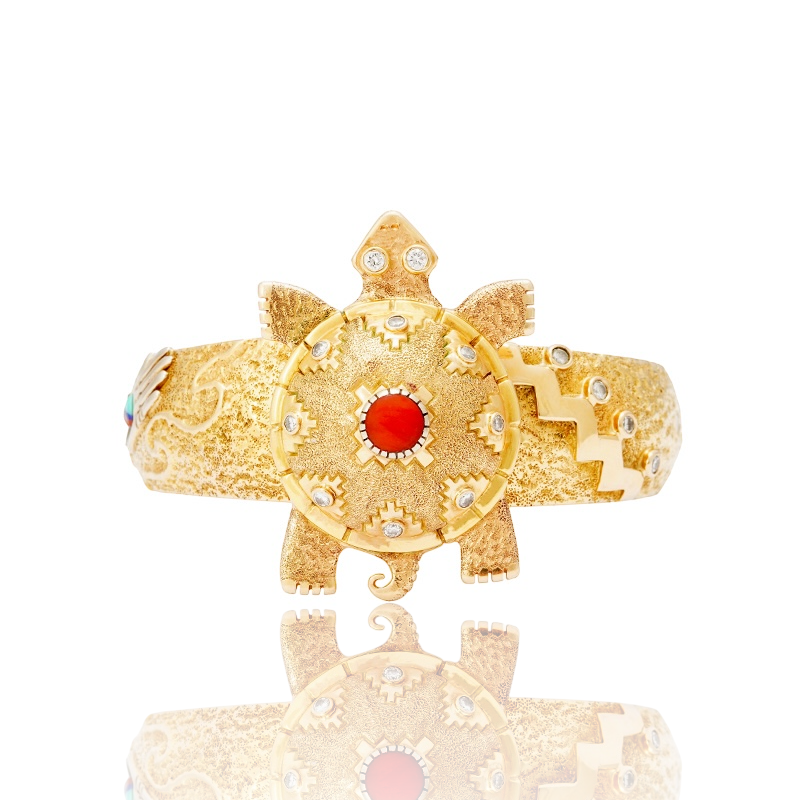
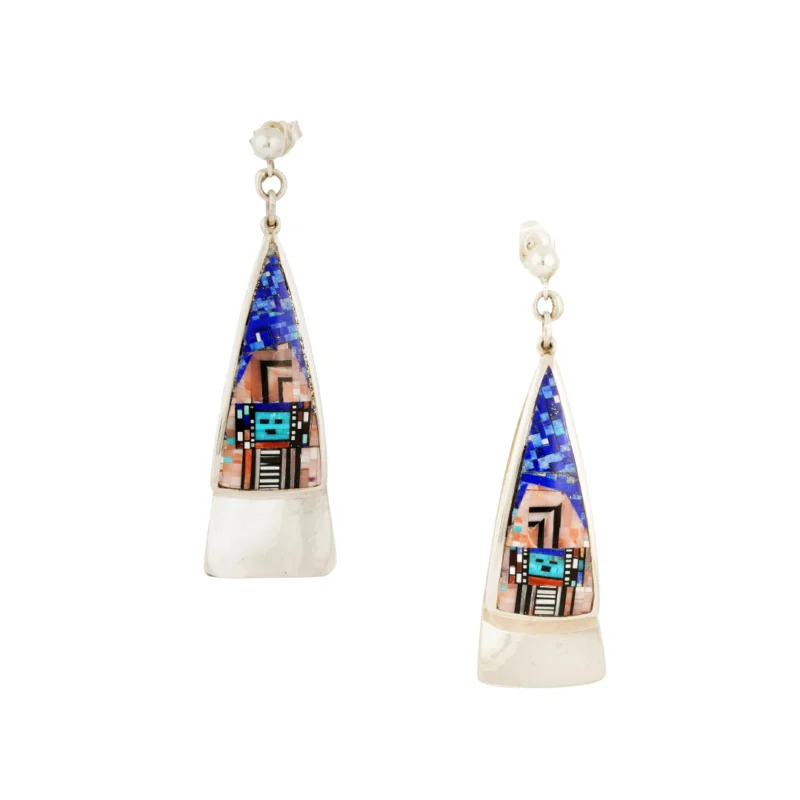
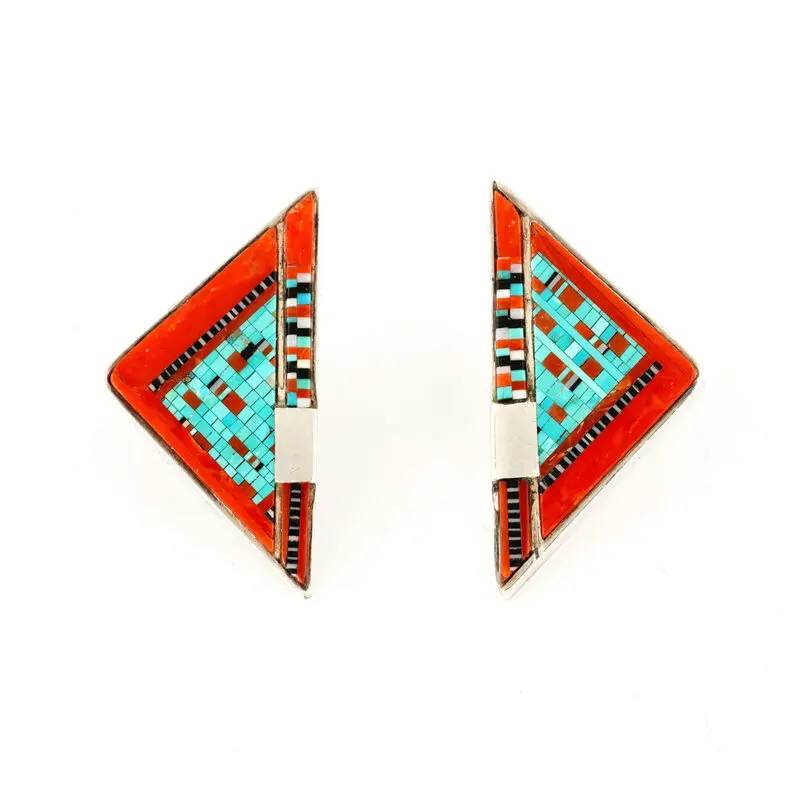
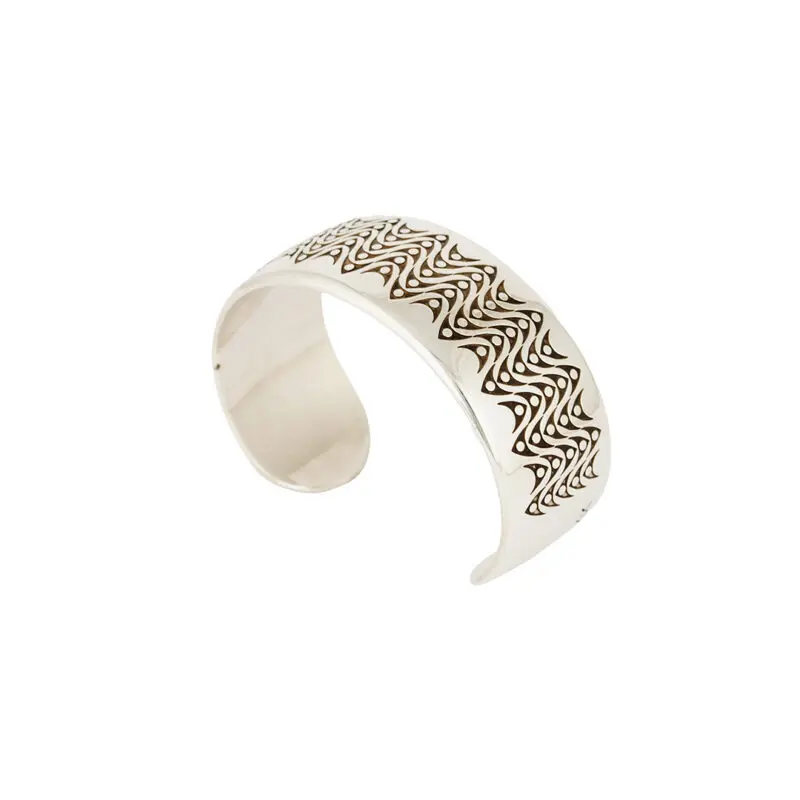
Today’s Navajo jewelers build on that foundation with new techniques, gold, and fine stones, while keeping the craftsmanship that made Navajo silver famous.
A Living Tradition
Weaving and jewelry remain central to Diné identity. Navajo artists continue to work in traditional forms and push them forward, and Faust Gallery is proud to share their work.
Timeline
- 1600s Navajo weavers adopt the upright loom from Pueblo neighbors
- 1850s Atsidi Sani learns smithing from a Mexican smith
- 1864 The Long Walk to Bosque Redondo
- 1868 Treaty signed; the Diné return home
- c. 1880 Turquoise first set in Navajo silver
- 1923 First Navajo Tribal Council formed
- 1968 Navajo Community College (now Diné College) founded